
Yoandy Cabrera
Karina Campos
Deborah Mogford
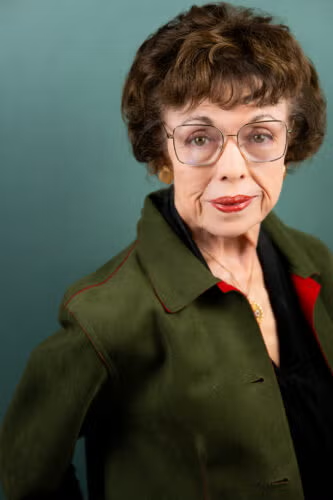
We have had the privilege of interviewing Deborah Mogford, Professor of Performing Arts at Rockford University, whose distinguished career in theater spans decades of teaching, directing, and mentoring students. Professor Mogford earned her bachelor’s degree in theater from Trinity University in San Antonio, Texas, and her Master of Fine Arts in Acting and Directing from the Dallas Theater Center in Dallas, Texas.
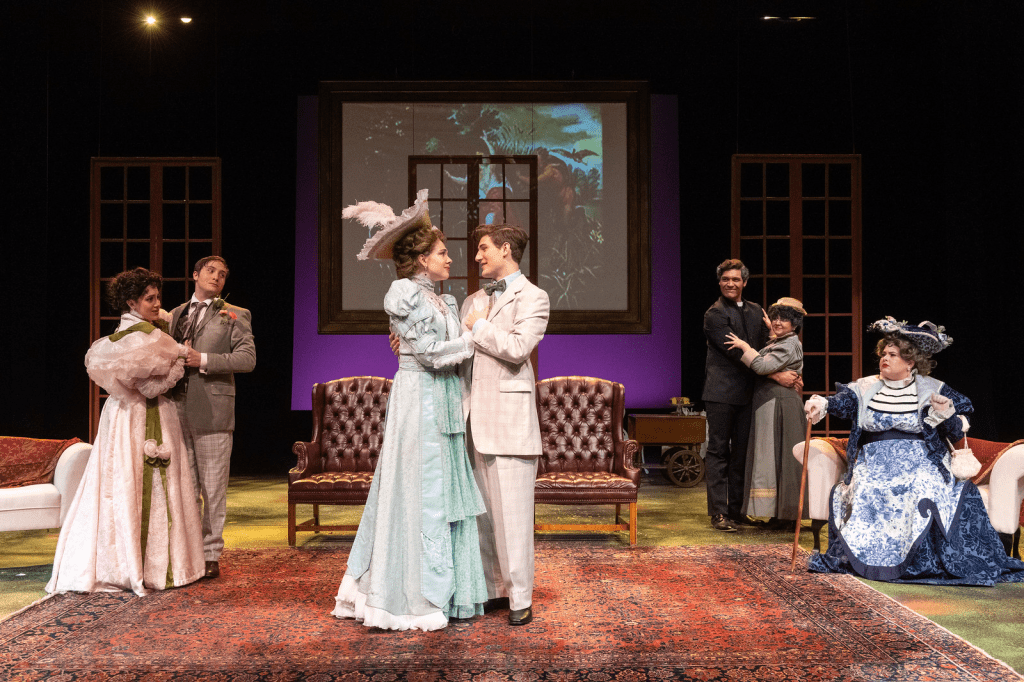
Before joining Rockford University, Professor Mogford spent 20 years at Baylor University in Waco, Texas, where she taught voice and acting technique to both graduate and undergraduate students. At Rockford, she has directed and staged numerous productions, including Antigone, Trojan Women, Richard III, Much Ado About Nothing, The Importance of Being Earnest, Exit the King, and These Shining Lives.
Her approach to theater is grounded in close reading, careful analysis, attention to detail, and a deep commitment to rigor. These principles are reflected not only in her productions but also in the way she works with and inspires her students.
We are grateful to Professor Mogford for taking the time to reflect on her career, her experiences in the theater, and some of the meaningful moments she has shared with her students throughout the years.
Yoandy Cabrera and Karina Campos: How was it growing up in San Antonio, TX?
Deborah Mogford: Texas is not a state. It is a country with five major cities. Hence, city-states. Each one is similar and yet very different. San Antonio was founded by Spanish explorers on May 5, 1718. I grew up surrounded by Spanish History and culture mixed with the significant contributions of the 19th-century German-Austrian, English, French, Greek, and Italian settlers. Just before the 20th century, the city saw the contributions of the Japanese—the lovely Sunken Garden was created by them as an expression of their love for the city—; the Chinese and the Filipinos arrived shortly afterward. In the 1960’s the Cubans arrived, adding even more character to the city. San Antonio celebrates all of its cultural diversity and embraces all the religions of the world. I grew up with so many different festivals and food experiences. Of course, Fiesta is the supreme celebration. Schools let out for the day of parades and dancing in the streets. I was the only child in my second- and third-grade classes born within the boundaries of the US. San Antonio has Fort Sam Houston, a major Army base abounding in history, and three Air Force bases. So many of my friends were world travelers.

From the fourth through the seventh grade, all of the schools in the city took their students twice each semester to the matinee days of the San Antonio Symphony. In March, the Metropolitan Opera arrived for an intensive two-and-a-half weeks of world-renowned opera under the direction of the great Victor Alessandro. His conversations with us during our matinee days, combined with seeing the marvelous opera productions, influenced my love for sung drama. Of course, my mother’s love for music and sharing of this love with my brother and me created our passion for the arts. She had a degree both in piano studies and in opera performance.
In the 1980’s the city hosted the most ambitious international arts festival in all of the Americas. For three intense weeks, world-famous ballet, opera, and theatre came to town. It was a feast for the soul. I am so sorry that those with a vision have passed away and have not been replaced by a generation with taste. My disgust with the end of the 20th century is another matter. The point is, my life was surrounded by art and diverse cultural joy.
In the summer months, we went to Dallas for wonderful theatre and to Fort Worth for beautiful art. Sometimes we went to New York City for theatre and museums. I had a graceful and loving childhood. There is more, but I will leave it and move on.
Living in such a historic city with so many missions, the Spanish Governor’s Palace, the main Plaza, the Alamo, La Villita, the McNay, and the River Walk within constant view gave me the perspective of always living in the past while being in the present moment and moving into the future, which in a blink of the eye becomes the past.

YC and KC: Why did you decide to study theater? Is there a strong artistic environment in San Antonio or Texas for studying theater?
DM: I believe I have already answered the second part of this question, but let me say that, with all of the surrounding arts, numerous people entered my life that would cause me to choose theatre as a life. When we moved to San Antonio, I was behind in the study of phonics, so I needed a tutor, and Miss Wills, who was in her mid-eighties, took me under her wings. She was an old-fashioned elocution teacher, and I adored her. She was elegant, tiny, intelligent, and a wonderful teacher. Two days a week, I lived in the 19th century, and I soared in phonics. I had several fine speech teachers who guided me through the demands of the statewide University Inner Scholastic Festivals and into the Trinity University Speech and Drama competitions. This competition would lead me to a scholarship to Trinity and my work with Paul Baker.
In the first weeks of my junior year of high school, something very “high school mean girls” occurred, and I pulled away from participation in the plays and some of the arts festivals. My brilliant mother picked me up one afternoon after school and took me to the then Incarnate Word College—now The University of the Incarnate Word—and in one brief afternoon my world changed. Maureen Halligan-Ibbs was a wonderful Irish actress who had worked with the Abby Theatre, appeared on the London Stage, and was a close personal friend of Tyrone Guthrie. It is through her that I had the opportunity to meet him and listen to his wonderful lectures. Maureen taught me so much about theatre, and life, and the joy of performing. She had come to San Antonio at the behest of Sister Germaine, a clever nun who wanted Maureen to build a theatre department for the school. Maureen came to do so and entice her husband, Ronald Ibbs, to join her in Texas. He had been ill, and Maureen wanted him out of the cold and damp of London and in the sun of a warmer climate. It worked, and he arrived. I was thrilled. He was a wonderful Shakespearean actor, and my love and understanding of the text I owe to him. I had the best of two worlds. At Incarnate Word, I had strong traditional Royal Academy training, and under Paul Baker I was given the strong lessons of the group theatre and the power of an American voice for ideas and a daring for experimenting.
All of the arts are connected. The vocabulary of design defines all of the arts, and I am grateful to Baker for his teachings and for surrounding us with gifted professors. He would make sure Baylor first and then Trinity would pay his “people” to study during the summer, or semester sabbatical, with the most brilliant artists of the day. Then Mr. Baker would invite the various artists to come to teach workshops, or direct a production, or create a new work. That is how I came to work with Arthur Lessac, be directed by the head of the London Academy of Music and Dramatic Arts, and have workshops with Robert Wilson, Edward Albee, Marcel Marceau, etc.
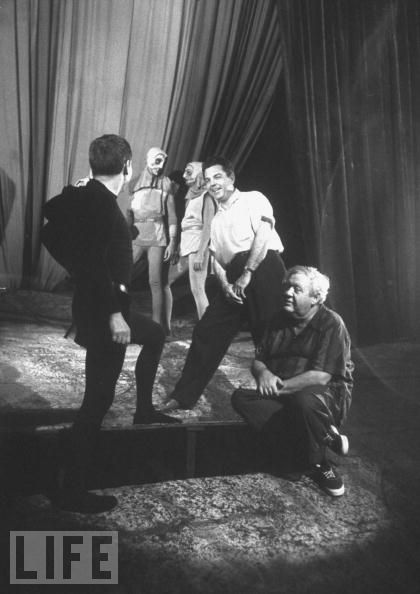
We had visits from so many artists, Carole Cook and Tom Troupe, Zero Mostel, Walter Kerr, etc. All of Baker’s teachers were excellent in themselves. Baker’s intensive summer of intellectual work in the morning and voice-body and movement in the afternoon, culminating with rehearsals for the summer company, were electrifying, and I miss those days. When Mr. Baker gave me a full-ride scholarship to graduate school at the Dallas Theatre Center, I was overwhelmed. Graduate school was difficult and demanding, and I am so glad I went through the joy and the torturous days. Wanda Laban, daughter of Rudolph Laban, taught there and was formidable. What a marvelous experience. My mentor from undergrad to grad school is Robyn Baker Flatt. While a freshman at Trinity, she introduced me to Greek Theatre and Trojan Women. It was so visceral that it forced us to combine our voice and body. We had to be bold and daring.
My year at the University of Texas gave me the opportunity to study with various members of Jerzy Grotowski’s company and extreme avant-garde theatre practitioners. I fell into acting and directing.
YC and KC: What was your experience like teaching at Baylor University for twenty years? Are there any special memories you cherish from those years?
DM: I adored my life in Waco and my time at Baylor until the unfortunate change in the administration and the regrettable change in the Board of Trustees. However, I treasure working in a major university with such a powerful history and devoted alumni. The students were sophisticated and arrived with so much knowledge in their field. The campus hosted seminars and speakers from former Presidents and sitting presidents of this country to prime ministers, business moguls, writers, artists, etc. So much energy, and joy, and possibilities, and money. Budgets for productions were endless.
The Theatre Department had new facilities when I arrived on campus. We produced four major productions a year—three plays and a musical—along with a full-blown production of a major opera. The School of Music gladly paid us for large opera productions, and the pit never had less than a full orchestra.
One of my highlights was staging Albert Herring by Benjamin Britten. I also coached the acting in La Boheme, Die Fledermaus, and Baby Doe.
My favorite memories of my productions:
– Caste, my first show at Baylor—I was only in my 20’s and very nervous. It went very well. I had professional actors returning for their master’s degree. What fun!
– Dr. Faustus by Marlowe. I staged it in contemporary dress and made the seven deadly sins very beautiful dancers, and very tempting. Older faculty across the campus thought I was “nuts,” but after seeing the production they told me I was right. The set had the shadows of a giant DNA Helix.
– Misanthrope by Molière, because it was spot-on period, great fun, and a joyous cast.
– The Immigrant was a new play about a true event in Texas, only produced at the Arena in Washington, DC up to that point. Four cast members and the joy of my life. I could write a book on my experience with this play. It confirmed for me that I could face any challenge or obstacle and end up with a moving show worthy of the true standing ovations. I could never stage this play again. It was too wonderful. With this play, I knew I was a director.
– Love’s Labors Lost was a thrill. Timm Adams was in the play. He was wonderful.
– Rumors by Neil Simon had the perfect sophisticated cast and a BMW on stage.
– Misalliance by Shaw was a delight. The ideal cast and a set where every piece of furniture was designed just for the show. This is the year I received an Excellence in Teaching Award from the African-American Student Association.
– On the Verge: The Geography of Yearning by Overmeyer. It was magical! It was prophetic because beloved Dr. Reynolds had stepped down as president of the University, and things were changing very quickly and not for the best. The last line of the play has Mary facing an unknown future but vowing to move forward. It was spring of 1999. I would leave in the spring of 2002.
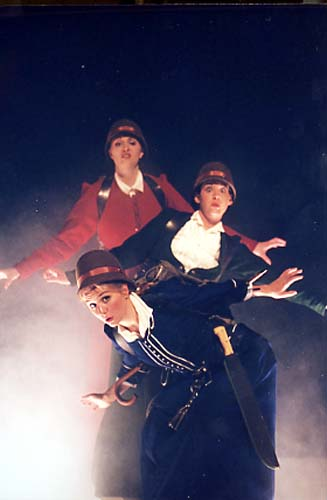
– Comedy of Errors was my last show and filled with so much love and joy and hope and sadness. I staged it with bright colors in a Commedia Del Arte style.
I also staged Crucible, Spoon River, The World of Carl Sandberg, and Amahl and the Night Visitors for Seventh and James Church; these were full productions using all of Baylor’s facilities. I also was invited to direct for the powerful local community theatre using Baylor actors and faculty (many were professors in other fields): The Women (52 women in the cast), The Royal Family, and A Funny Thing Happened on the Way to the Forum.
My 20 years in Waco were grand, but death, loss, and changing governance can alter plans.
My work at Baylor and all of the coaching I did for major regional auditions brought me into contact with Cash Baxter, a student and personal friend of the great Sanford Meisner. We admired each other, and I learned so much from him.
YC and KC: Can you share some of the experiences with your students that have meant the most to you throughout your career?
DM: In my first year at Baylor, I had a senior-level student with a serious speaking issue. She began to tutor with me, and we were able to correct her speech patterns. Also, in my first year, I introduced the one-person show, and a graduating senior staged a conversation with Margaret Sanger. A member of Planned Parenthood saw the show, and for the next 18 years she traveled the world performing her show on behalf of Planned Parenthood. She retired to marriage and motherhood.
I helped two young women go to graduate school, and one continues on as an actress and the other is a world traveler and writer. I was impacted by her story of abuse and fear. It was my privilege to help her.
Coaching one of my students over the phone for their audition and interview with American Repertory Theatre, headed by the famous Robert Brustein and Robert Orchard. More about her in the next question.
The young man who was very difficult in his freshman year entered his sophomore year in the character study class with his usual attitude until he produced an environmental study for Henry V. He transformed the Black Box into the encampment on the fields of France. It was brilliant, and I told him he was a designer and technical wizard. He became a designer and the production manager of various theatres throughout Texas. He credits me for his career choice.
My first year at RU, I met a student who had been overlooked as an actress and relegated to management. I cast her in a major role. Her confidence level soared.
YC and KC: How do you feel when you see or hear about your students achieving great things in life, such as reaching their career goals?
DM: I am thrilled!!! To sit at the National Theatre of Great Britain, the Alley, or in New York City and watch my students is fulfilling. To know how many have gone on to be performers is rewarding, but the greatest feeling comes when they contact me and thank me not only for the lessons in acting or directing but for life. I am so overjoyed when I know they are living happy and loving lives, while contributing to their families and communities, no matter if they are performing or not.
Many of my former students from Baylor are close friends. We stay in contact, and I am blessed to know them.
YC and KC: What do you enjoy most: teaching, directing, or acting? In your professional experience, do you see these roles as interconnected?
DM: Yes, teaching only enhances my understanding of my field and gives me greater perspective for directing. I enjoy teaching acting but have not felt the need to perform in many years. I have performed in Love Letters and various reader’s theatre, but of late I have thought of acting if something interesting came my way. For now, I find it a challenge to uncover a contemporary script worthy of time and effort. I would like to create a new work. In teaching the Beginning Acting Shakespeare class, I found a new way to approach King Lear. There’s always something to be learned or a new perspective to experience.
YC and KC: Which Greek play have you most enjoyed directing?
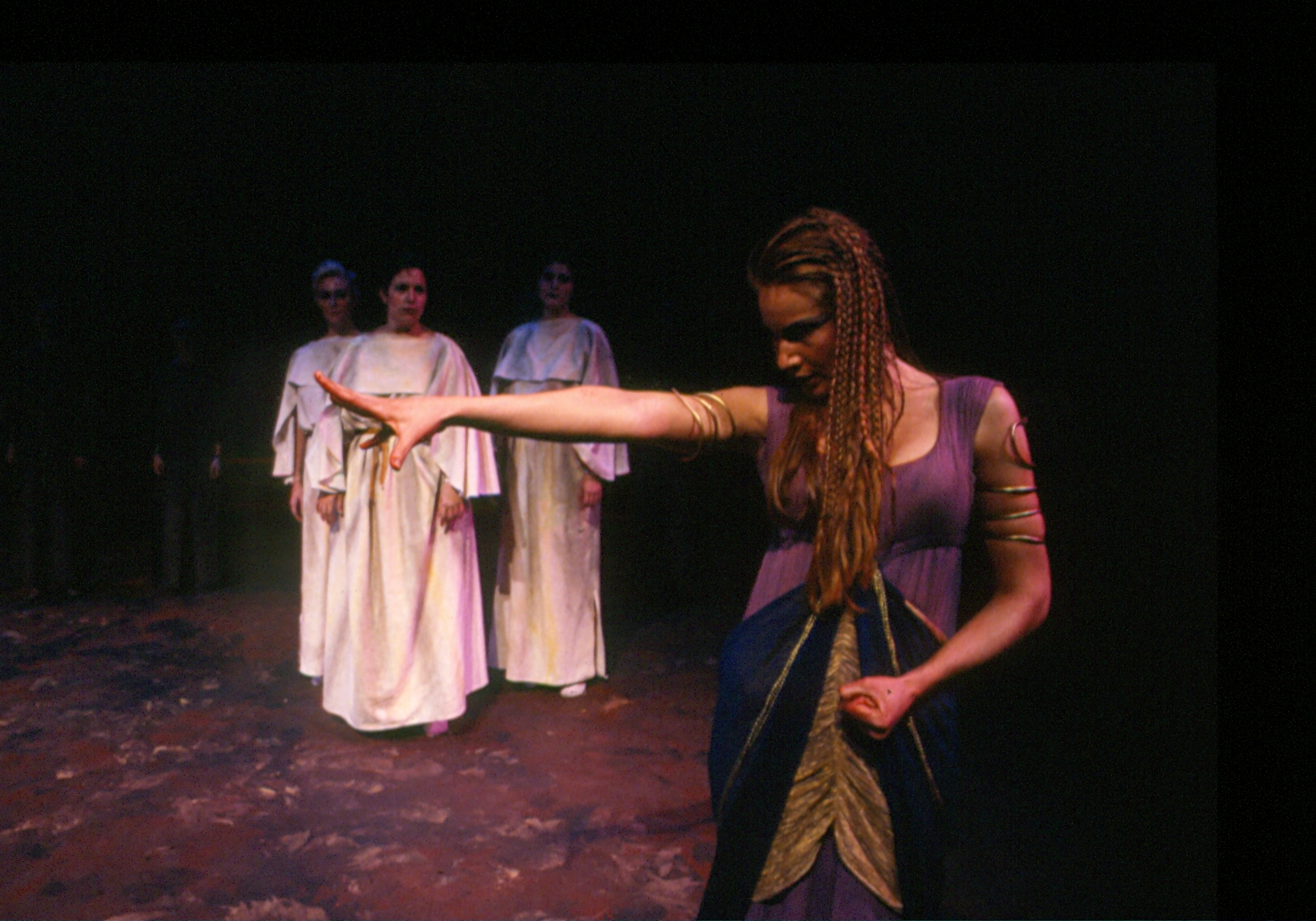
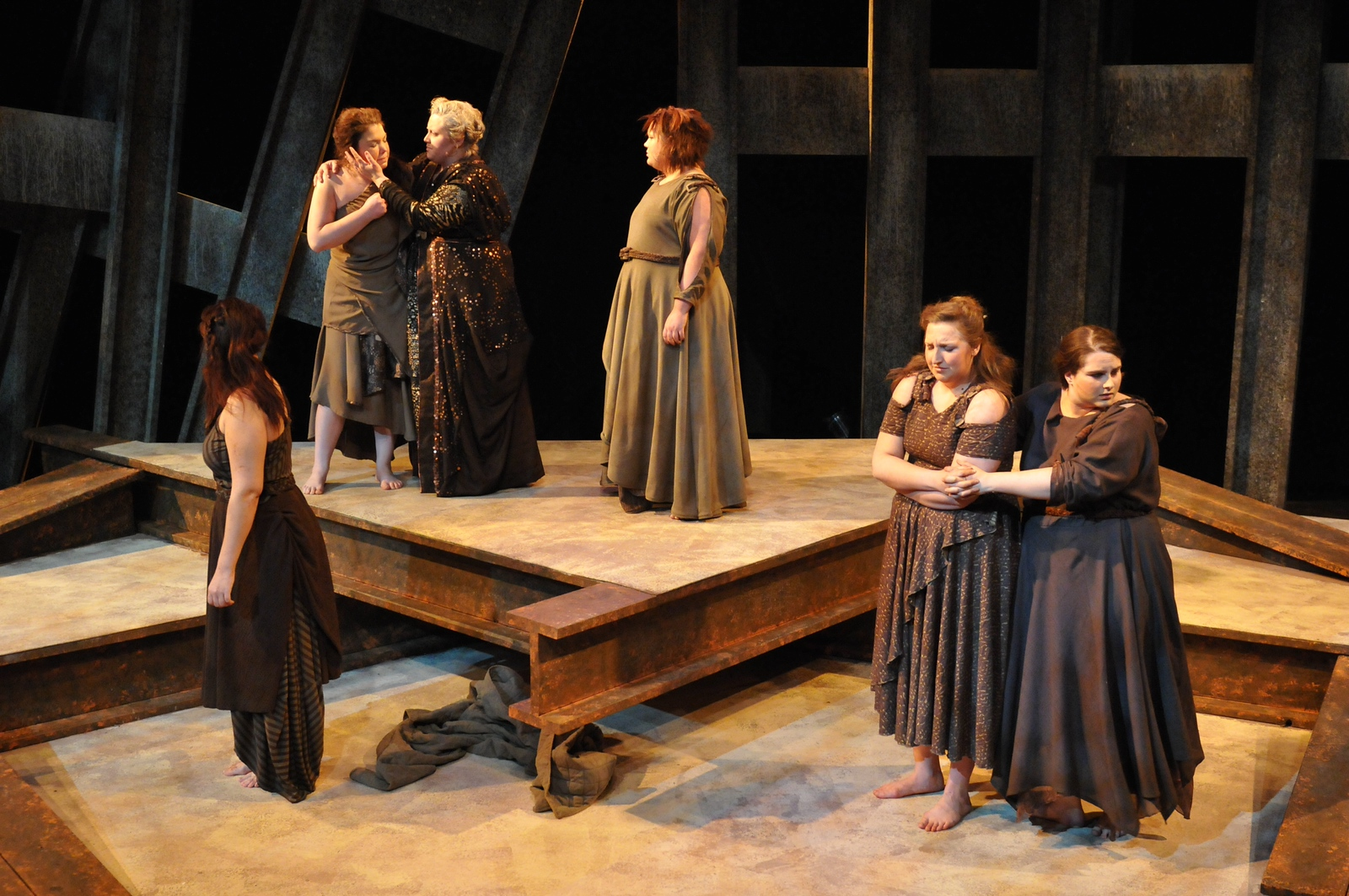
DM: I have directed Trojan Women three times. All three were different and wonderful experiences. My favorite production was for RU. I am very proud of that work and that cast. I have directed scenes from Medea while at Baylor, but not staged the full show. Truly, I can say the Antigone at RU has been my favorite. The subject of Mercy, Justice, and honoring our relationship with each other in brotherly love is epic and timeless. Every actor was committed to this production. I know that members of the chorus have said how powerfully it affected their lives. It was an honor to work with them. I would like to stage Oedipus at some point, but an actor to play the role is key.
YC and KC: Can you mention some of your favorite productions during your time at RU?
DM: The Diary of Anne Frank
Guys and Dolls
Heartbreak House
And Miss Reardon Drinks a Little
Love’s Labors Lost
A Flea in Her Ear
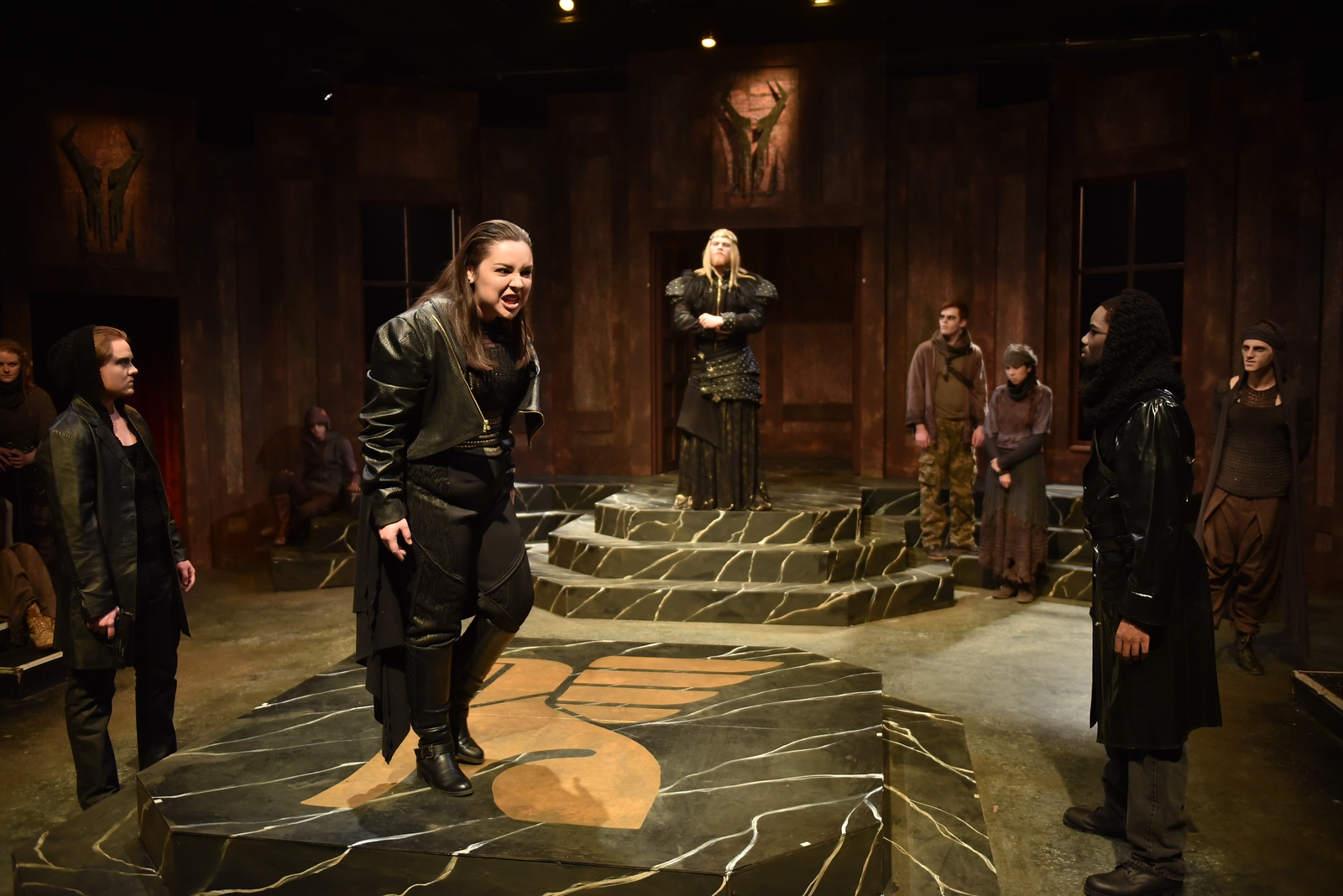
Richard III
Spoon River Anthology
These Shining Lives
The Importance of Being Earnest
Much Ado About Nothing
YC and KC: Could you share more about the preparation required to be an actor and a director?
DM: Knowledge in the liberal arts, and particularly in history, the classics, literature, philosophy, cultural behavior, art history, music, dance, and singing. An actor must train their voice and body, since it is their only instrument. They should understand health and wellness to find physical and emotional endurance. They must study different styles and various techniques (stage and film) of presentation. They must read continually and commit to memory passages of scripts and poetry. Actors and directors must understand and recognize the elements of design and creation. Both must understand space, line, and shape. They must know how to process thought. Both must learn how to listen and fearlessly access their instinct. It takes 20 years to become an accomplished actor and director.
YC and KC: How is the process of connecting a play with a class?
DM: All of my classes are geared from the first year to the last to connect. One is the foundation for the next. If I cast a sophomore in their first semester, I will call upon the lessons of Lessac, Laban, and basic character analysis from the first-year class. The basic movement study is utilized. If I cast a student in their junior or senior years, then they must draw from the spring semester of the sophomore year with the course unique to us at RU in character development. On a Saturday of rehearsals for my shows, everyone presents their study, and it puts us ahead by three weeks. The Directing class calls on the actors to understand movement in space and the use of sight lines, so blocking becomes instinctual to the actor and the soul of their character. The classes in performing Shakespeare, Comedy of Manners, and in exploration of postmodern work of the 20th and 21st century draw from the basic tools as the foundation for study in style and philosophy of the time period.
I expect the actors and young directors to call upon their classes in all histories, classical studies, religion, art history, etc. I want to aid in advancing intelligent actors who trust their unique instincts. I want them to reach for exaltation of the script. All of the classes are geared for performance, but in truth all of my classes are geared for life. Sanford Meisner alone is a solid rock for living.
YC and KC: Why Rockford University?
DM: This is so personal. If I told you why, you would think I was “crackers.” I had left Baylor and worked in the private non-profits as a development leader. I worked with company CEO’s and raised money for children and education. In 2007, I began work with the Dallas Children’s Theatre and loved it. By that fall, I had Timm calling and asking me to apply for the acting position. I said no, and then the texts and phone calls and emails started coming from former students begging me to apply, so I finally gave in and sent in my application. I was asked to come to campus for an interview and teaching demonstration. I agreed because of Timm. What I found were students in great need of training and care. I changed my teaching demonstration to accommodate the students. I found out later I was their unanimous choice. It took me three days of weeping to decide to come. I was planning to turn down the offer but… the reason is personal. I thought I would be here for 10 years and then return to my beloved state, but I am still here, and I hope to continue making a difference until I know it is time to leave.




Leave a Reply