
Yoandy Cabrera
(To Anna, Catherine, James, and Suzanne, for the good company)
I have seen Shakespeare in Cuba, in Europe, several times at the Globe (even sitting where the Queen used to sit), on Marquee TV, and in the United States. But it was last night, September 24, 2026, thanks to Starlight Theatre’s production of The Tempest (1611), directed by Deborah Mogford for Rock Valley College, that I truly came to appreciate and directly experience the powerful connection between nature and theater—so essential to this and many other Shakespearean plays.
For me, this production is another confirmation that Rockford is a place for theater, including classical pieces.
The Starlight production uses a simple yet highly functional set design, with trees and plants becoming active elements of both the action and the stage. Like the Greeks at the origins of theater, we, the spectators, gathered together and sat on the natural slope beside the Starlight stage. The production respects the spirit of Shakespeare’s original play while introducing changes that make feel the event rooted in the Rockford community and in the present.
I know how brave Mogford can be in taking on a challenge like staging Sophocles, Euripides, or Shakespeare in the Rockford area. Seeing this production confirmed that courage to me in many ways. Every actor speaks from the truth of their character, and the result is a performance that feels genuine and alive. My favorite performances were Dalton Allen’s Stephano, Kevin Poole’s Caliban, Madison Leeder’s Miranda, and the exceptional duo of Ariel and Prospera, performed by Elle Laesch and our very talented Carolyn Cadigan.
Ariel’s movement and vis comica, expressed through so many small details—fingers, feet, head, and eyes—are a joy to watch. Laesch also choreographed the production, and her physical work as Ariel is one of its most delightful features. As for Cadigan’s performance as Prospera, I experienced two wonderful surprises. First, I knew that Carolyn—an actress and a person I greatly admire—was part of the cast, but I did not know that she was playing the powerful sorcerer. Second, when I saw her on stage, I thought: “Is she playing Prospero? Is she representing a masculine character?” (Totally possible, by the way.) Then I opened the program and discovered that she was not Prospero. Even better: she was Prospera. We had our Prospera. I had my first Prospera. And it had to be her. Then everything made sense.
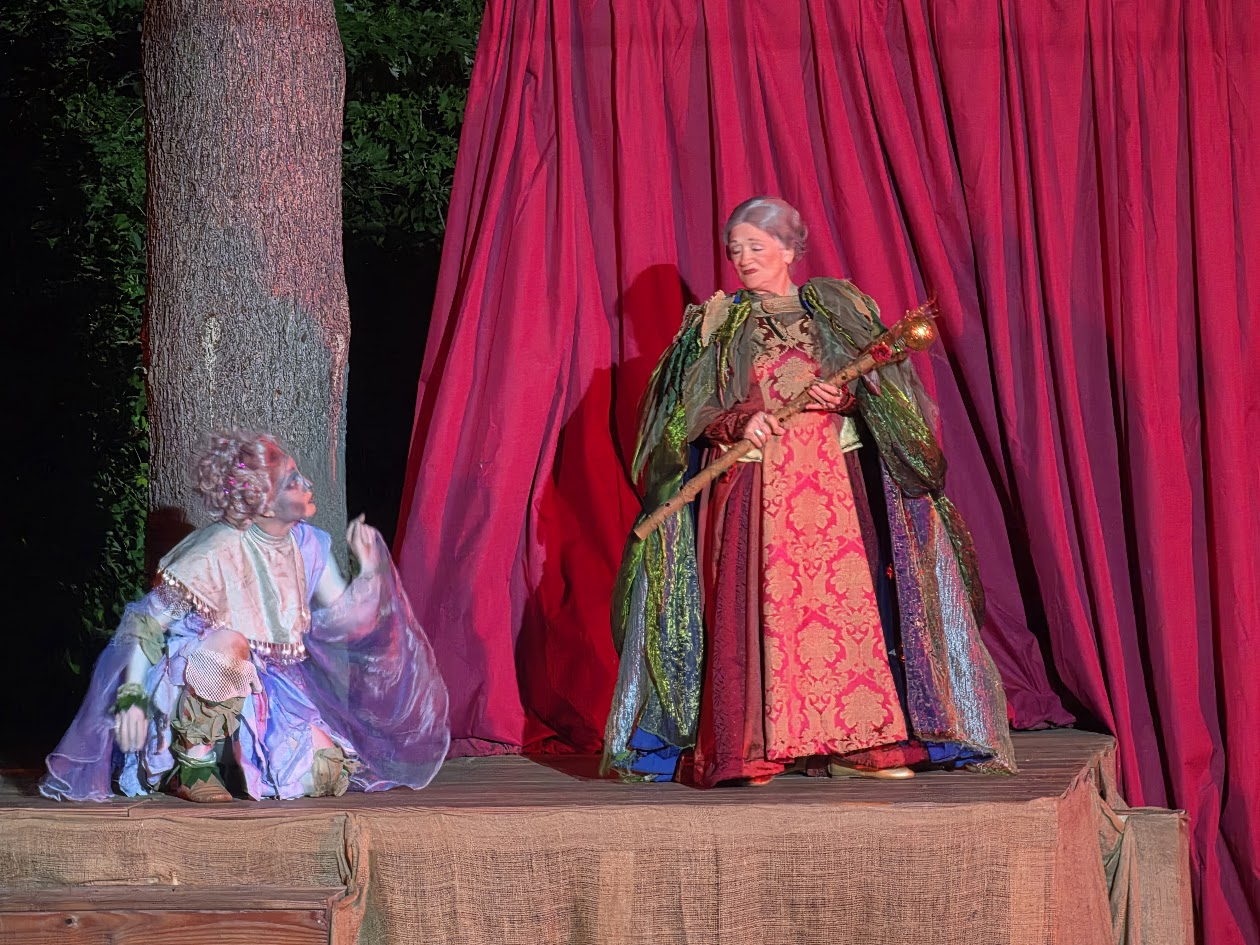
Cadigan is, of course, not the first Prospera. In the program, she dedicates her performance “to her late sister Camilla, who beautifully Prospera’d before her.” As Rufus Cadigan reminded me during intermission, Helen Mirren famously played Prospera in Julie Taymor’s 2010 film adaptation of The Tempest. Other acclaimed actors, including Sigourney Weaver (in the West End), Kate Burton (at the Old Globe Theatre), and Martha Henry (at the Stratford Festival), have also taken on the role.
As Mogford explains in the program, “having this character be female rather than male (…) adds a different dimension to the role.” For me, seeing a female Prospera on stage created a connection between The Tempest, more specifically, this character, and other female protagonists from the same period in the Spanish comedia: figures such as Circe and Medea in plays like El mayor encanto, amor (1635) by Calderón de la Barca and Los encantos de Medea (written in 1629 and published in 1645) by Francisco de Rojas Zorrilla. There is an especially intriguing connection here: both of these Spanish plays were performed at El Retiro Park in Madrid, another example of theater unfolding in a natural setting.
Circe and Medea, like Prospera, are sorceresses. The three characters are also situated in distant, wild, intricate, and magical places; marginalized by others; expelled from their social contexts; and endowed with enough power to take revenge on their enemies. Having a female Prospera on stage made it easier for me to see these connections among the three characters.
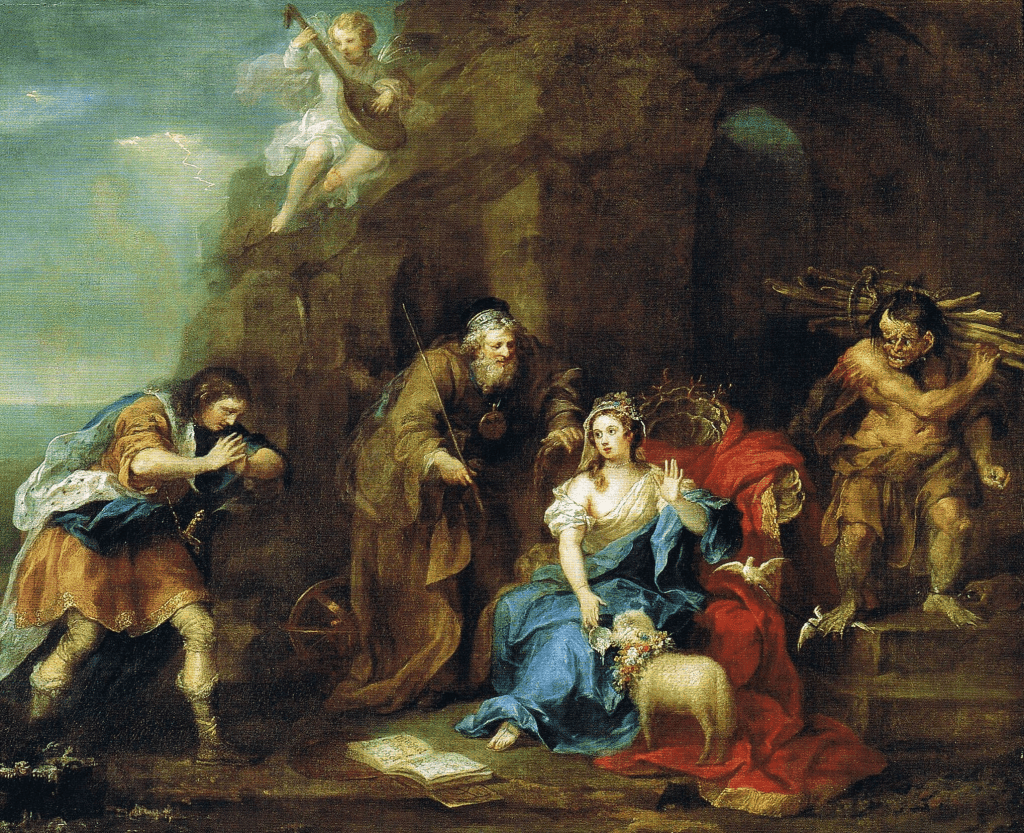
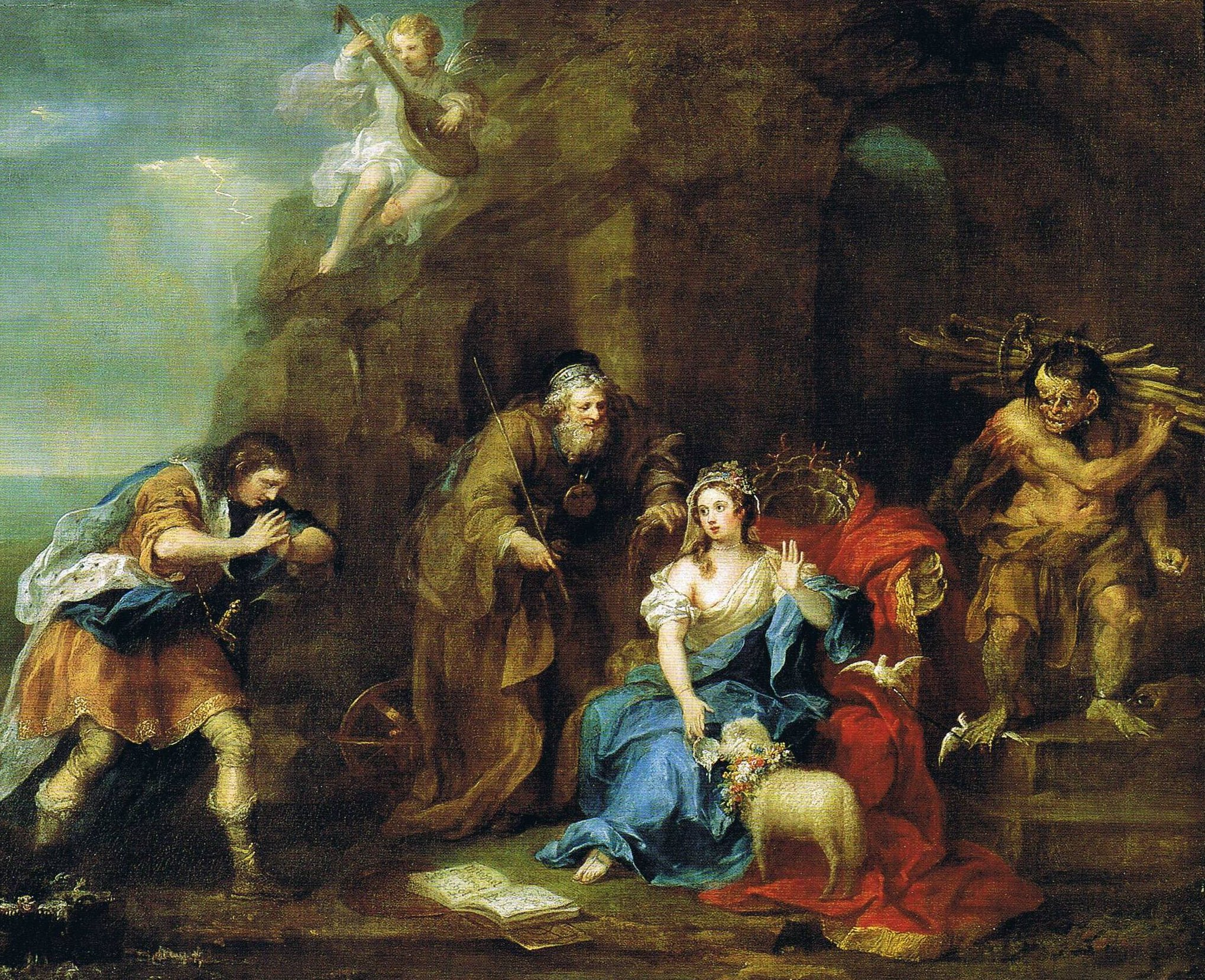
Prospero is, therefore, a particularly good example of how Shakespeare transforms earlier mythological elements and figures into new mythology through an extraordinarily creative process. Prospera is also Medea. As some scholars have pointed out, the final monologue of Shakespeare’s character is based on Medea’s speech in Book 7 of Ovid’s Metamorphoses. Scholars such as Hilaire Kallendorf have also explored the relationship between Shakespeare and the Spanish comedia.
Shakespeare takes Virgil and Ovid and transforms episodes from their works into something new through his own style and worldview. He also incorporates mythological figures such as Juno, Iris, and Ceres into this process. These three goddesses are summoned by Prospero’s spirits to perform a spectacular wedding masque for Ferdinand and Miranda.
Prospera, as a female character betrayed by her brother, also creates an intriguing parallel with Dido, the Virgilian heroine of the Aeneid. Dido is explicitly mentioned in The Tempest by Gonzalo, Adrian, and Antonio in a moment of comedy and confusion:
ADRIAN: Tunis was never graced before with such a paragon to their queen.
GONZALO: Not since widow Dido’s time.
ANTONIO: Widow? A pox o’ that! How came that “widow” in? Widow Dido!
SEBASTIAN: What if he had said “widower Aeneas” too? Good Lord, how you take it!
ADRIAN: (To Gonzalo) “Widow Dido,” said you? You make me study of that. She was of Carthage, not of Tunis.
GONZALO: This Tunis, sir, was Carthage.
ADRIAN: Carthage?
GONZALO: I assure you, Carthage.
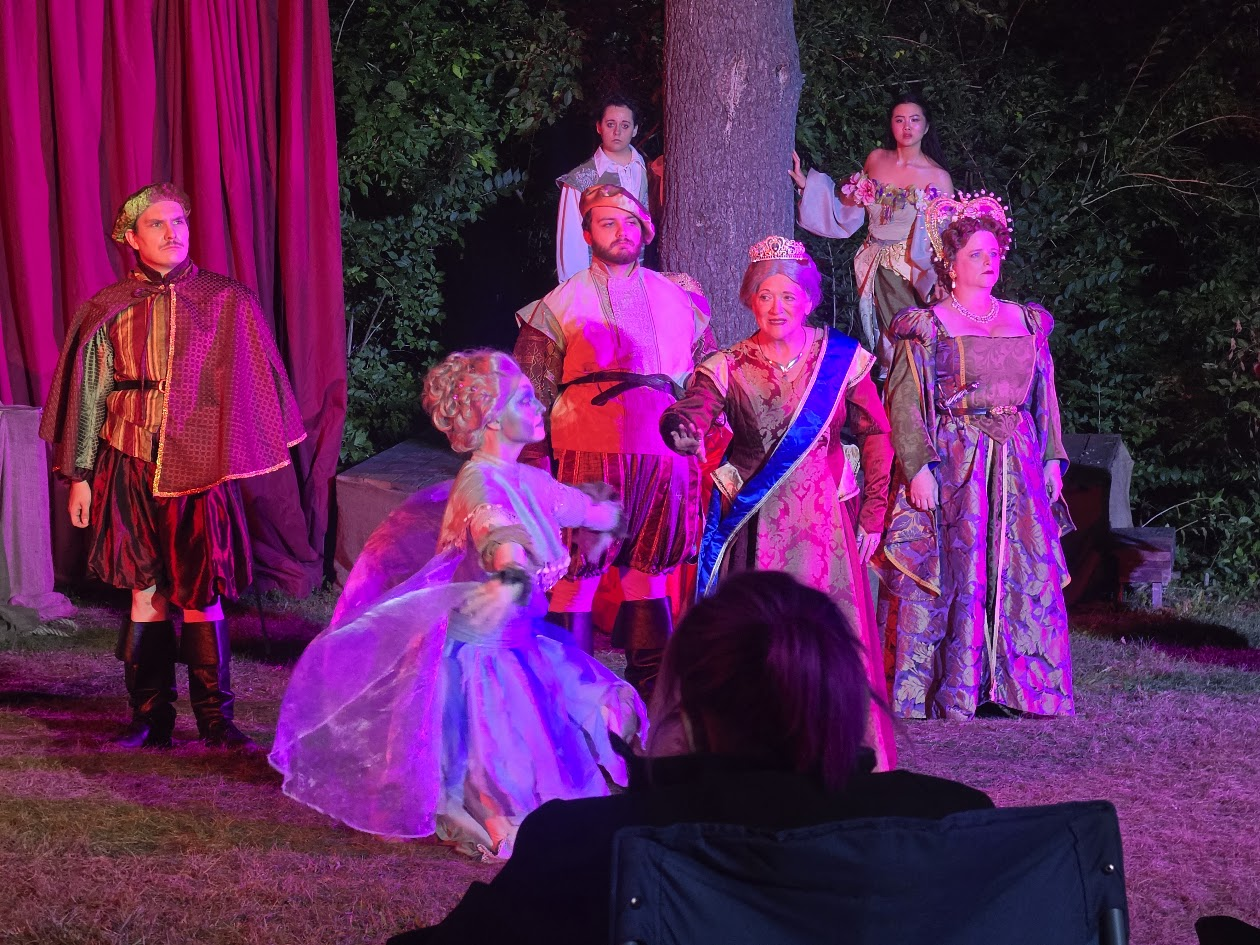
Prospera is not the only gender-swapped character in this production. As the director explains in the program, in the original, “Gonzalo is a male character too”; instead, “our Gonzala [Ky Rankin] is a woman of means and wealth.” The court jester Trinculo is also a male character in Shakespeare’s original. In this production, however, the role becomes Trincula, vividly performed by Rachel McBee. “However,” the director explains, “female court jesters of the Renaissance period were very fashionable.”
Ariel and Caliban, meanwhile, have a particularly significant afterlife in Latin American intellectual and cultural history. In 1900, José Enrique Rodó published Ariel, one of the most influential works of cultural and political philosophy in Latin America. Rodó uses characters from Shakespeare’s The Tempest—especially Ariel, Caliban, and Prospero—as an allegorical framework to warn Latin America against abandoning its distinctive Greco-Roman and Hispanic spiritual heritage in favor of a purely economic utilitarianism. His ideas contributed to the formation of Arielismo, a movement among Latin American intellectuals and statesmen concerned with protecting continental identity from ideological and physical foreign intervention.
In 1971, Roberto Fernández Retamar published his essay Calibán (later Todo Calibán), a reinterpretation of these same Shakespearean characters from an explicitly anti-colonialist perspective. The contrast between Rodó’s Ariel and Retamar’s Todo Calibán is particularly revealing: the same Shakespearean figures could be appropriated and transformed to articulate very different understandings of Latin American identity, colonialism, culture, and political power. Both works have been highly influential, while also provoking substantial debate, criticism, and challenges to their interpretations.
Mogford’s productions are created from practice, research, and talent. But there is more. In my personal experience, her work has a remarkable effect: after attending one of her shows, I find myself returning to the play, reading essays, diaries, articles, and other materials connected to it. Her productions do not end when the curtain falls; they send me back to the texts.
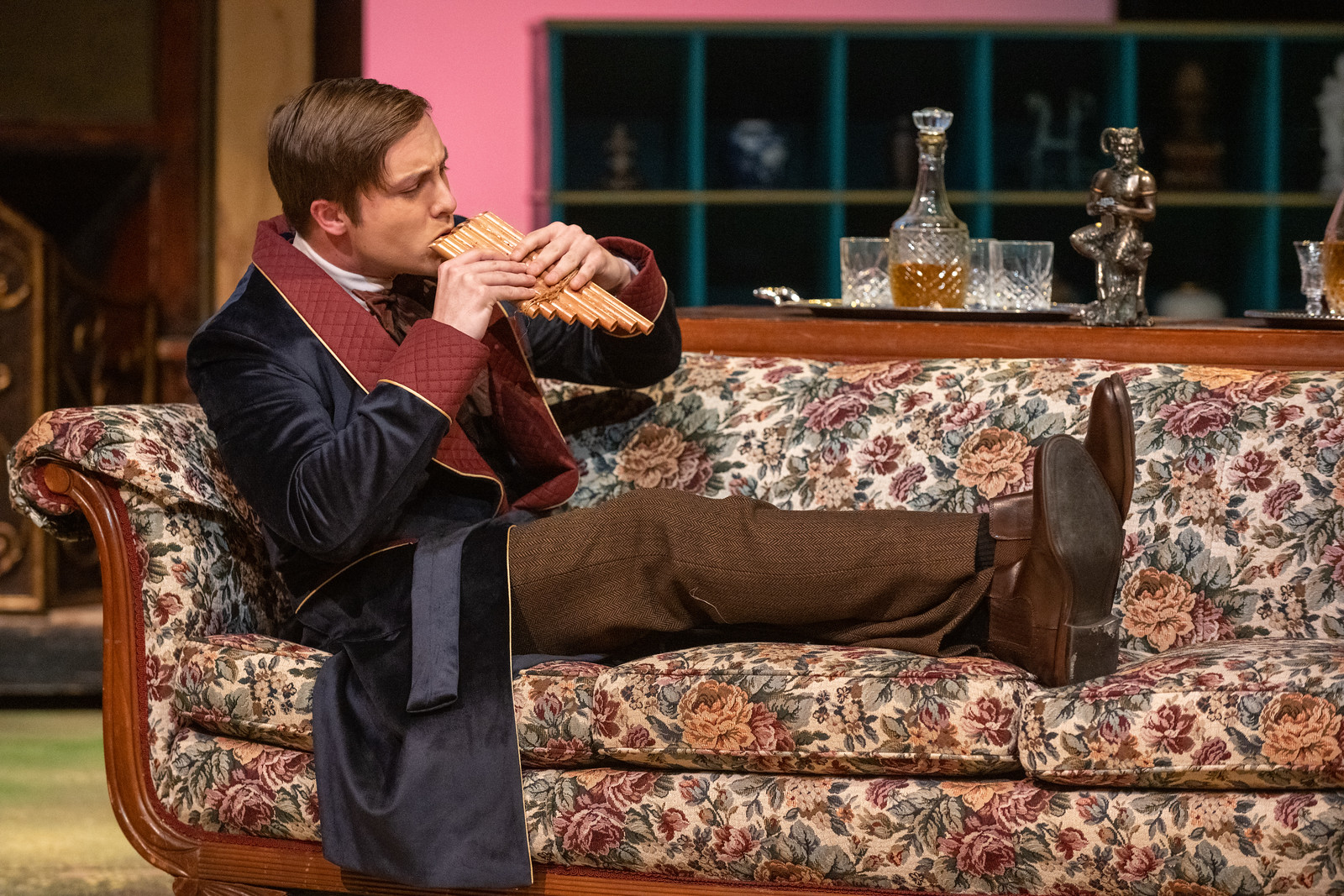
For example, after attending her staging of The Importance of Being Earnest at Rockford University in 2023, I ended up rereading the play, purchasing the transcripts of Oscar Wilde’s trials, and adding to my personal collection a copy of the Pan sculpture that had been used as part of the stage design. It is a privilege to experience Mogford’s work. It makes me a better reader and, ultimately, a better scholar.
The Tempest confronts us with a profoundly challenging question: What do we do with power? How should we act when we have power? After twelve years, Prospera has the opportunity to take revenge on her enemies. She has both the means and the power to do so. But should she? How do we distinguish between what we can do and what we should do? As Mogford writes in her program notes, “The Tempest continues to remind us of the healing power of forgiving and offering mercy to our transgressor.”


Leave a Reply