

General Program
ROCKFORD UNIVERSITY
5TH ANNUAL HUMANITIES CONFERENCE

April 4th – April 5th 2025
Location: Fisher Memorial Chapel
Rockford University 5050 E State St. Rockford, Il 61108
All times are Central Standard Time
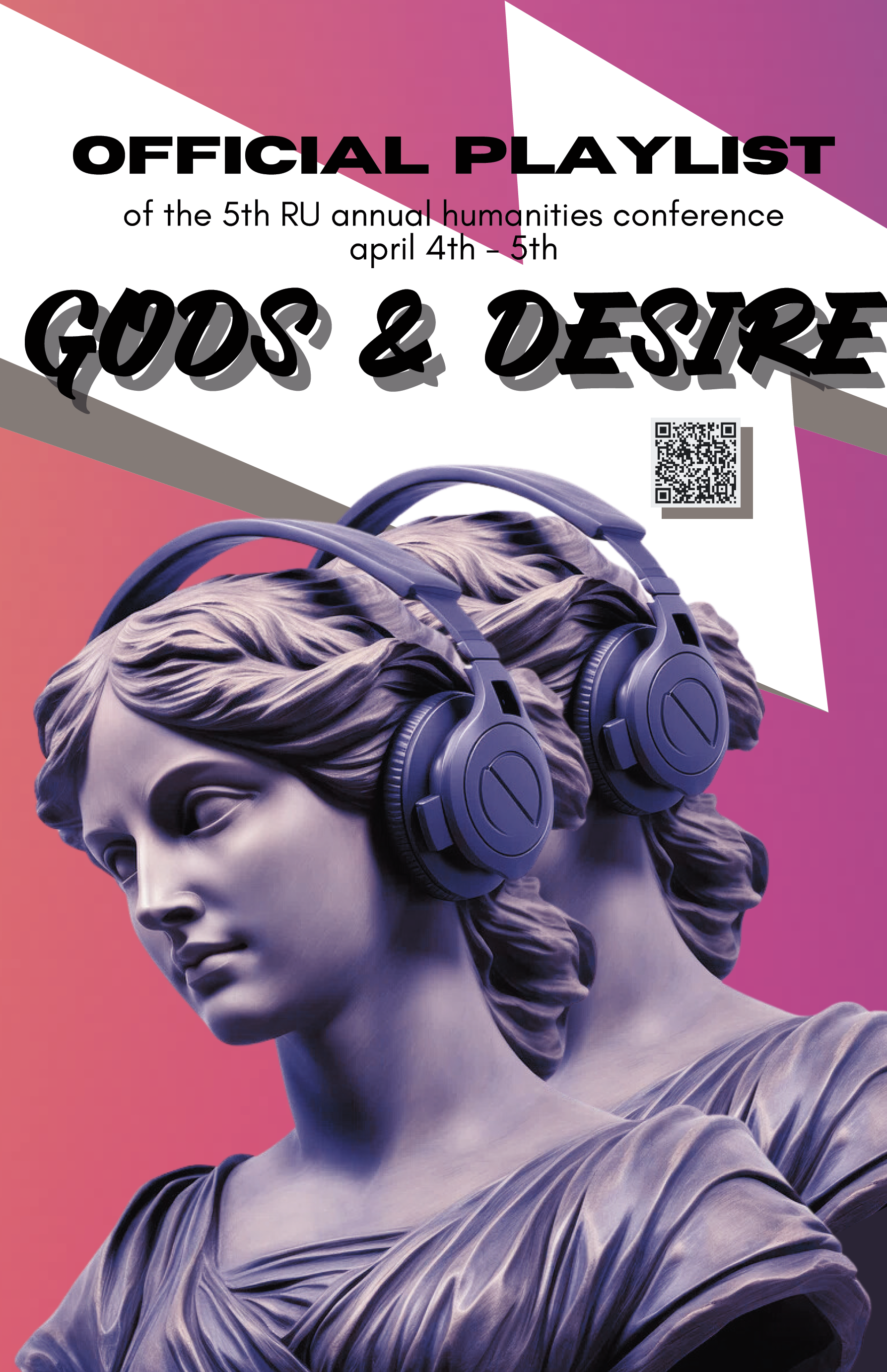
| Official Conference Playlist |


Friday, April 4, 2025
8:00 to 9:00 am Breakfast
9:00 to 9:10 am Opening Remarks
Dr. Ron Lee, Associate Professor of Political Science and Faculty Chair, Rockford University
9:15 to 9:25am Select Readings of Sacred Texts on Desire
Mr. Spitama Tata, a reading from the Avesta, Yasna 44-2, 44-10, 31-4, 45-6 Zarathushtra’s thoughts as he desires to know Ahura Mazda
Dr. Jules Gleicher, a reading from the Tanakh, Deuteronomy 6:1-9
Desire of God for the people
Rev. James Fambro, a reading from the New Testament, Revelation 21:1-7, 22:16-17
Desire for a just World-to-Come
Imam Dr. Mohamed Elghobashy, a reading from the Quran, Al-Shams 6-10, 37-40
The need to control human desire
9:30 to 10:30 am
GODS, DESIRE AND TRADITION
Moderator: Dr. Genevive Dibley, Rockford University
Keynote Speaker Presentation Edmondo Lupieri, Ph.D. – Loyola University Chicago
A Short History of Super-Human Desire
Edmondo F. Lupieri taught at the universities of Rome, Turin, and Udine. Presently holds the John Cardinal Cody Endowed Chair in Theology and teaches New Testament and Early Christianity at Loyola University Chicago. He has published books and articles on the New Testament and its figures (esp. John the Baptist and Mary Magdalene), Early Christianity, Christian and non-Christian Gnosticism, various phenomena of religious Syncretism involving Christian elements, modern and contemporary Christian history.

10:45 to 12:00 pm
EMERGING SCHOLARS LAB
The Emerging Scholars Lab is sponsored by the Journal of the Jesus Movement in its Jewish Setting. JJMJS is a peer-reviewed academic open access journal funded by Hebrew University (Jerusalem), the University of Oslo (Oslo), and DePaul University (Chicago). The JJMJS Emerging Scholars Lab is designed to critically engage the work of undergraduate scholars interested in graduate level academic study. Students’ papers refined in the Lab will be published in the Emerging Scholars section of Journal.
Moderator: Dr. Genevive Dibley, Rockford University
Student Participants:
Megan Larkin, Rockford University
The Woman, the Womb, and the Wardrobe: An Analysis of Sex in Religion
Rudy Vazquez, Rockford University
Crumbs of Mercy: Narrative Desire and Divine Boundaries in the Encounter with the Syrophoenician Woman
Journal of the Jesus Movement in its Jewish Setting (JJMJS) Respondents:
Dr. Ralph Korner, Professor of Biblical Studies, Taylor Seminary of Kairos University, Edmonton, Alberta, Canada. JJMJS Forum Director.
Dr. Emanuala Valeriani, Centre for Advanced Studies Beyond Canon, Universität Regensburg, Germany.
12:00 to 1:00 pm LUNCH
1:00 to 1:20 Rockford University Humanities Teaching Award Ceremony
1:30 to 2:45 pm – Panel One
Moderator: Dr. Matthew Flamm, Rockford University
Maria (Masha) Holubeva, Rockford University
Castration for Salvation
Annelise Loser, Rockford College
Samson and Delilah: The Gender Divide
Andrew M. Johnson, Rockford University
Lady Gaga Is Over! A God is Born: Myth, Modernity, & the Dichotomy of Aphrodite
Alexandra Gutierrez, Rockford University
A Sacred Equation: The Math of the Gods
15 minutes discussion
3:00 to 4:15 pm – Panel Two
Moderator: Dr. Xavier Fole Varela, Rockford University
Maddyson Halpin, Rockford University
Eternal Discord: The Troublesome Union of Zeus and Hera
Victoire Omari, Rockford University
The Nature of Love in Aristophanes’ Speech in Plato’s Symposium
Muhammed Ustundag, Rockford University
Aristophanes Speech, An Insight on Love
Delaney Risse, Concordia University Irvine
The Role of Religion in Influencing Our Desire for Virtue
15 minutes discussion
4:30 to 5:30 pm – Panel Three
Moderator: Dr. Yoandy Cabrera Ortega, Rockford University
Persian Wars: A Discussion
Students of the History of Greece Class
Saturday, April 5, 2025
8:00 to 9:00 am Breakfast
9:00 to 9:10 am
Langsea Dibley, Auburn High School
The Paradox of Desire
9:15 to 10:15 am
GODS, DESIRE AND THE POETS
Moderator: Dr. Yoandy Cabrera Ortega, Rockford University
Keynote Speaker Presentation: Marelys Valencia, Ph.D. – Saint Mary’s College
Pilgrimage and Sanctuary of Fasting Daffodils
Marelys Valencia has a Ph.D. in Romance Studies from the University of Miami and works as an Associate Professor in the Department of Modern Languages and Cultures at Saint Mary’s College. Her collection of poems Piélago de sombras was a finalist for the Award “Poet in New York”, sponsored by Valparaíso Editions, 2020. Bokeh Press published her volume Pilgrimage in Three Lapses in bilingual format, in 2021. Her most recent poetry collection, Sanctuary of Fasting Daffodils was released in November 2023 by Almenara Press. Part of her work can also be read in numerous literary magazines in the Spanish language. The Fonoteca Española de Poesía included her in its catalog of poets from Cuba in the United States. Marelys is also an active researcher in the fields of media, performance and diasporas.

10:30-11:45 pm – Panel Four
Moderator Dr. Matthew Flamm, Rockford University
Brandon Roberts, Knox College
Desire and the Neighbor-Thing in Catherine of Siena’s Dialogue
Alexa Custer, Knox College
The Problem of Being ‘Too Bodily’: Gender, Desire, and Religious Experience in Medieval Mysticism
Marli Messner, Knox College
Transcendent Transmission and Spiritual Affect in Julian of Norwich’s Revelations of Divine Love
15 minutes discussion
11:45 to 12:45 pm LUNCH
12:45 to 1:15 – Panel Five
Moderator: Dr. Yoandy Cabrera Ortega, Rockford University
Astrid Brunk, Knox College
Programmed for Ascension: The Desire for Personhood in the Garden of Eden
Reagan Butler, Knox College
The House of Women: Black Narcissus and the Origins of the Horror Nun
Hannah Terry, Knox College
Opportunities Granted by the Vow of Chastity
J. Porter, Knox College
Hrotsvitha: Nun as Artist
15 minutes discussion
CLOSING REMARKS
Dr. Jennifer Langworthy, Dean, College of Arts and Humanities; Assistant Professor of Art – Rockford University
Paper and Artist Awards
2026 Conference Theme and Date Announcement
————————
Abstracts
Astrid Brunk, Knox College
Programmed for Ascension: The Desire for Personhood in the Garden of Eden
This excerpt from a larger work analyzes the 2014 video game The Talos Principle’s approach to the problem of the definition of personhood. A technological retelling of the biblical story of the Garden of Eden, The Talos Principle explores the desire to ascend from a lower to a higher state of being by way of a series of Socratic dialogues between the robotic player character (representing the prelapsarian human) and a troublesome AI (representing the serpent). In examining these dialogues, I isolate the game’s ultimate argument that to make a claim about your own nature in a paradoxical environment is the defining factor of personhood and apply it to the original story of the Fall in Genesis 2-3 for a new understanding of the transition from prelapsarian to full human.
Reagan Butler, Knox College
The House of Women: Black Narcissus and the Origins of the Horror Nun
This paper tracks the origins of nunsploitation and the horror film trope of the Nun character back to Powell and Pressburger’s 1947 film Black Narcissus. The film is a melodrama (or a “woman’s film”), as it showcases pent-up emotion, repressed individuality, and forms of normalized female control. This paper argues that the discursive spaces and fluidity granted to the melodrama allowed this film to shape both evolving horror genre film techniques and the Nun in horror trope. With a focus on feminist film theory and postcolonialism, this paper links the ‘monstrous feminine’ to the ‘woman’s film’ while analyzing how religion and sexuality coalesce in horrific ways.
Alexa Custer, Knox College
The Problem of Being ‘Too Bodily’: Gender, Desire, and Religious Experience in Medieval Mysticism
This paper explores the intersection of gender, desire, and religious experience in medieval Christian mysticism, examining how the bodily manifestations of visions were presented differently for male and female mystics. I argue that women’s mystical experiences were often dismissed as “too bodily,” while men’s experiences were abstracted and intellectualized. Female mystics frequently experienced and expressed physical manifestations of divine desire, which were often deemed excessive or problematic by religious authority. In contrast, male mystics expressed their desire for the divine through intellectual contemplation, utilizing female imagery to explain their spiritual experiences. This paper examines the gendered nature of religious authority, demonstrating how male theologians minimized the legitimacy of women’s mystical experiences, often relegating their physicality to metaphor. Ultimately, this study reveals how medieval Christianity’s theological frameworks shaped the relationship between desire, the body, and the divine, highlighting the ways gender influenced the interpretation and validation of religious experiences.
Maddyson Halpin, Rockford University
Eternal Discord: The Troublesome Union of Zeus and Hera
The marriage of Zeus and Hera is a central story in Greek mythology, that has been retold numerous times. The marriage personifies the complex themes of power, authority, love, and infidelity. As the King and Queen of Mount Olympus, their union is meant to symbolize love, strength, and commitment. Instead, it represents persistent discord, lust, and infidelity. This paper examines the myths often referred to when discussing the marriage of Zeus and Hera and explores how these myths portray their roles, while simultaneously highlighting human-like flaws such as jealousy, love, stereotypical gender roles, marriage, authority, and conflict.
Maria (Masha) Holubeva, Rockford University
Castration for Salvation
The Skoptsy were a radical Russian Christian sect that emerged in the late 1700’s, striving to receive salvation through extreme bodily mutilation, castration. This paper explores the origins of castration within global religious and cultural practices, investigating how a seemingly small sect was able to amass a cult following, including the aristocratic elite and royalty. It is through the careful analysis of historical records, that this paper strives to provide insight into the motivations, grand influence, and substantial societal impact of the Skoptsy sect.
Andrew M. Johnson, Rockford University
Lady Gaga Is Over! A God is Born: Myth, Modernity, & the Dichotomy of Aphrodite
My Artpop could mean anything,” echo the words of Lady Gaga on the title track midway through her album. November 2013 the album was released without much fanfare and a lot of critical feedback. Cited as vapid, lacking substance, and too experimental for its time, the EDM-inspired (Electronic Dance Music) album sought the fusion of art into pop in the same vein that Andy Warhol sought to put pop into art. This album sought to dig deeper than the surface level critiques recognized. Artpop’s depth is well versed with themes of love, fame, and the dichotomy of self. The album Artpop explores the theme of self and love similarly to that explored by Plato in his discussion of love in Symposium that separates Aphrodite into two beings; a common and celestial deity.
Megan Larkin, Rockford University
The Woman, the Womb, and the Wardrobe: An Analysis of Sex in Religion
Human sexuality and its expression have primarily been dictated by what culture has deemed acceptable. As ancient culture was shaped by religion, understanding sexuality through the lens of religion provides a greater understanding of the reciprocal relationship between religion, culture, and human behaviors. This paper aims to analyze Biblical scriptures and Greco-Roman mythology as they relate to their historical concepts surrounding sexuality, reproduction, and gender roles.
Annelise Loser, Rockford College
Samson and Delilah: The Gender Divide
Judges presents a prominent view on gender that draws a line through Eve to Delilah. The story of Samson in Judges 13-16 creates a clear picture of the gender divide through the contrast of characters, Samson and Delilah. An analytical read of the text provides a theme of the necessity of both man and woman to carry out divine plans. Despite the patriarchal nature of the Hebrew Bible, authors do not ignore the importance of women. However, the purpose of Delilah is not to demonstrate lust or her ability to conceive. Rather, it is through Samson’s love of Delilah that he redeems himself and carries out the purpose of freeing the Israelites.
Edmondo Lupieri, Ph.D., Loyola University Chicago
A Short History of Super-Human Desire
Why on earth should the Greco-Roman gods, Jewish canonical and non-canonical angels, and extra-terrestrials out of their spaceships be so interested in our sexual life to desire to have sex with humans? By analyzing some study cases in each of the three categories identified above, we will describe analogies and differences in religious and para-religious traditions that either influenced or are the product of many aspects (originally European) of our contemporary American culture.
Marli Messner, Knox College
Transcendent Transmission and Spiritual Affect in Julian of Norwich’s Revelations of Divine Love
For Julian of Norwich we are bound to each other by love, and this is expressed through our permeability to one another—our capacity to affect each other by the power of God’s love. Julian’s theology demands the reconciliation of affect theory, which theorizes the body,
relationality, and emotion, with divinity. For Julian and for affect theorists, feelings are communication through the body. Her visions are not only imagistic, but are more fully engaged with the senses, affirming the body’s place in spiritual learning, and demanding a place for the spiritual within affectual thinking. Indeed, the integration of the spiritual supports many of the concepts at play in affect theory. Interrelationality is at the heart of the connection; Julian makes a spiritual claim that people are bound to each other and to God through love, and I argue for including a transcendent love so as to reach a unified theory of affectual relationality.
J. Porter, Knox College
Hrotsvitha: Nun as Artist
Hrotsvitha is the first recorded female playwright, and yet most modern analysis of her work is overshadowed by her life as a nun or comparisons to her male inspirations, most notably the Roman playwright Terence. Rarely do current Medieval playwriting scholars address her work without comparing the quality of her prose to other male writers in the field. I argue that focusing on her identity as a woman, a nun, or the quality of her text misses the point of what makes her a revolutionary writer; she was the first playwright to tell female-centered adaptations of stories well-known to her readers. While all of her plays are worth reexamining, I will be exploring how her play Callimachus, based on a story in the Acts of John, recontextualizes the Apostle John’s adventures to focus on the horror of unwanted sexual encounters that chaste women often faced.
Delaney Risse, Concordia University Irvine
The Role of Religion in Influencing Our Desire for Virtue
Religion has historically played a significant role in shaping moral behavior and fostering the desire for virtue within individuals and societies. This paper examines the psychological, social, and theological mechanisms through which religion influences the desire for virtuous conduct. Drawing from both historical examples and contemporary research, it explores how religious beliefs, such as the concept of “supernatural monitoring,” motivate ethical behavior by encouraging individuals to align their actions with divine expectations. Additionally, the influence of social pressures within religious communities is discussed, highlighting how some religious groups encourage prosocial behavior due to the desire for a virtuous public image. The work of theological figures like Martin Luther and Søren Kierkegaard is also explored, offering insights into how faith can inspire a desire for moral transformation and guide individuals toward ethical living. While religion does not guarantee virtuous actions, the paper demonstrates that it plays a crucial role in cultivating the desire for virtue by creating conditions that encourage moral self-improvement.
Brandon Roberts, Knox College
Desire and the Neighbor-Thing in Catherine of Siena’s Dialogue
In The Dialogue, Catherine of Siena’s conversations with God revolve around questions of divine desire: what to desire, how to desire it correctly, and when we can expect to be satisfied. For Catherine, desire is the infinite component of our finite being, the only way we can repay Christ’s infinite sacrifice through finite deeds. Psychoanalytically speaking, desire is often discussed not as an intersubjective glue, but as the very impasse of relationality: desire is precisely what obstructs our vision when we attempt to see the Other. Yet Catherine’s desire and Lacan’s should not be so easily dichotomized: most significantly, both agree that acceding to one’s desire constitutes the ethical act as such, and both agree that the site of this ethic is the Neighbor. By bringing these two into conversation, a politicized and theologized Lacan meets a radicalized Catherine. Finally, though, the conversation appears rather one-sided, as Catherine’s ethics combat what Jane Gallop has called “the inherent constitutional weakness of psychoanalysis: its tendency to be apolitical.” If theory is serious about its contemporary “turn to religion,” then a confrontation with ethics and normative justice is inevitable; none are exempt from the politics and theology of this “mystic activist.
Hannah Terry, Knox College
Opportunities Granted by the Vow of Chastity
The young noble women in medieval Europe were desired– politically, socially and sexually– leaving them to fulfill the role of an object rather than a subject. As an object, they could fulfill either a hypersexual role, mother, in order to transmit social class by noble birth, or a virginal role, nun, to enhance the social standing of their family. These roles made women meaningful to their families, but the choice was not always made with their consent. The monastic vows, particularly chastity, are by necessity restrictive and controlling. At the time, the vow of chastity offered women an opportunity. The opportunity for social authority and power that could be used to protect their autonomy. I will be examining three prominent women, Diana D’angalo, St. Elizabeth of Hungary, and Heloise, as case studies to explore how the vow of chastity provided freedom to some medieval noblewomen.
Marelys Valencia, Ph.D., University of Miami
Sanctuary of Fasting Daffodils, is the third book of poetry by Marelys Valencia. It weaves stark imagery and evocative similes to chart a journey from her childhood on an unnamed island to a desperate, surreptitious escape. In the first section, the poetic voice introduces a Leader who proclaims that “islands aspire to become empires,” while simultaneously crafting “visions of women without wombs.” As a result, in the second section of the book the adult emerges as a “fugitive” who is “without a homeland.” No longer bound to the island, it is only the narrator’s ghost that remains, silently observing the world from the margins. From her first book, she will read some poems as well. It grapples with a woman’s nomadic trajectory, while she struggles to make sense out of her past simultaneously forging new paths. Poetry becomes a space for reflection on the inadequacy of the migrant self.
Rodolfo Vazquez, Rockford University
Crumbs of Mercy: Narrative Desire and Divine Boundaries in the Encounter with the Syrophoenician Woman
As early Jesus following communities grappled with inherited covenantal frameworks and shifting cultural landscapes, the Gospels began to imagine divine mercy as something no longer bound to lineage alone, but responsive to speech, persistence, and human longing. This paper explores how one moment—Jesus’ encounter with the Syrophoenician woman (Mark 7:24–30; Matthew 15:21–28)—formulates mercy not as a top-down expression of authority, but as drawn out through narrative tension and rhetorical agency. Through the use of a narrative-critical framework supported by feminist insights, this study examines how the woman’s voice—unfiltered, unrestricted, and effective—reshapes the trajectory of the encounter with Jesus. In both versions, Jesus responds rather than initiates; the woman becomes the catalyst of healing and the reconfiguration of divine action. Her desire functions not as background motivation, but as a plot-driving force. This analysis asks: what does it mean for divine mercy to be portrayed as not static, but as narratively negotiated in response to human appeal?
Muhammed Ustundag, Rockford University
Aristophanes Speech, An Insight on Love
In this paper I address Aristophanes speech in Plato’s Symposium. How it’s points to desire and love in a comical manner. The gods and humans’ relationship with desire and love. And how it could be theologically incorrect based on his explanation of events. This paper is my analysis on the speech itself and the views it had.
__________________________________________________________
Conference organized by Dr. Genevive Dibley and Dr. Yoandy Cabrera Ortega

 Deinós