

Yoandy Cabrera
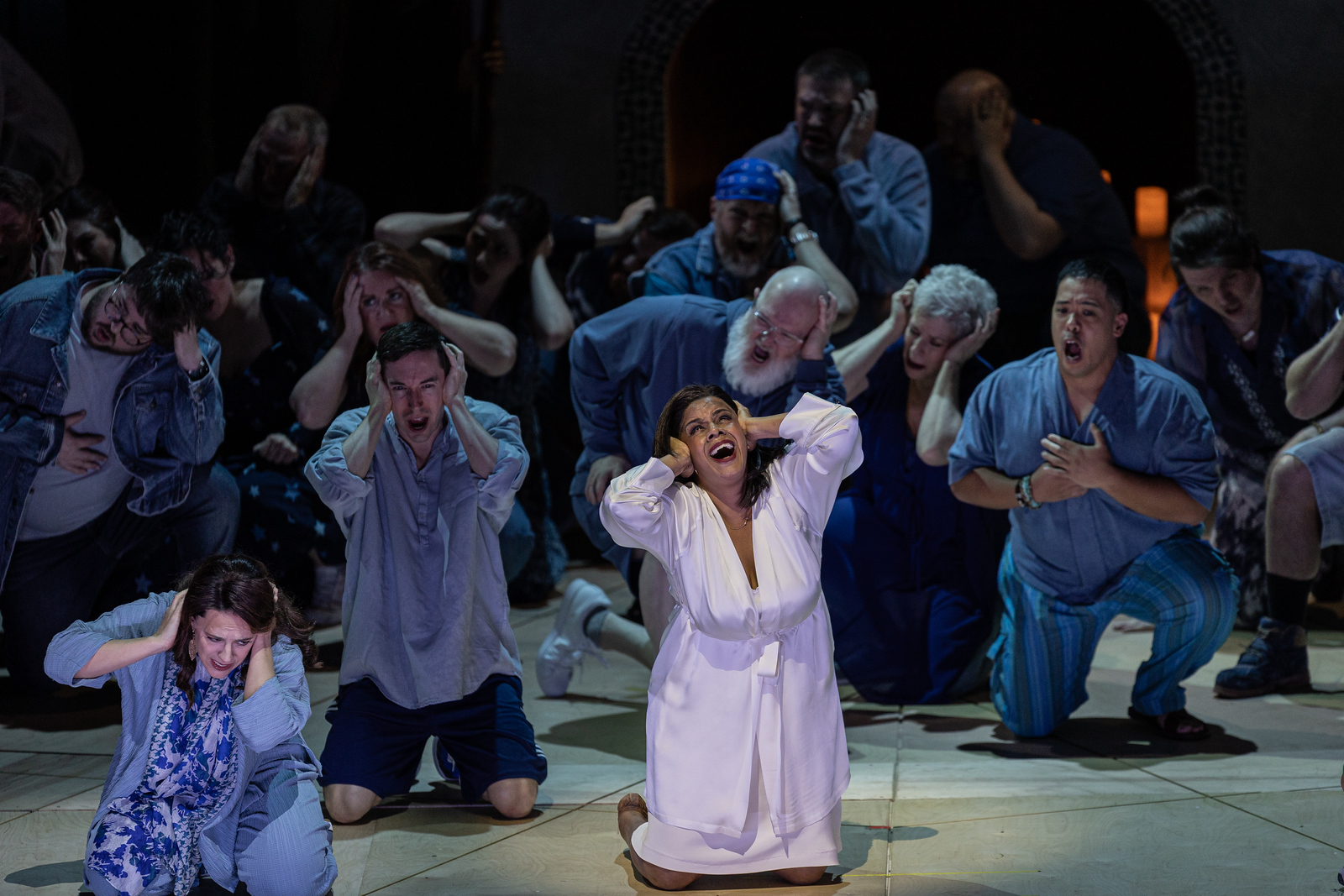
The Listeners, an opera by composer Missy Mazzoli and librettist Royce Vavrek, made its Lyric Opera of Chicago debut on March 30, 2025, under the baton of music director Enrique Mazzola. Originally directed by Lileana Blain-Cruz, the production has been revived by Mikhaela Mahony for this engagement.
Set in the contemporary American Southwest, the narrative centers on Claire, a schoolteacher portrayed by soprano Nicole Heaston as her Lyric debut, whose life is upended by a persistent, unidentifiable hum that only certain individuals can perceive. In her quest for answers, Claire becomes entangled with “The Listeners,” a community group led by the enigmatic Howard, played by bass-baritone Kyle Ketelsen. The ensemble cast includes Jasmine Habersham as Ashley, Claire’s daughter; Daniela Mack as Angela; and Jonas Hacker as Kyle.

This Lyric production is both haunting and innovative, integrating modern technological elements such as live video projections and social media feeds to enhance the storytelling. This approach brings a futuristic tone to the play, with characters’ confessions recorded on camera and a reporter delivering news in real-time through song. My friend Anna, who attended the premiere with me, believes—and I agree with her—that this is a 21st-century Orwellian opera. This fusion of media and operatic performance is industrious, although sometimes the plot of the opera feels more suited to a television series or film, potentially challenging traditional opera audiences. The libretto is, by the way, based on a novel by the Canadian novelist and playwright Jordan Tannahill.

The opera ambitiously tackles a multitude of themes, including noise pollution, anxieties over technology, sonic attacks, governmental control, human impulses, family dynamics, loneliness, miscommunication, love, generational conflicts, the rise of cults, and education. However, the breadth of topics results in a diffusion of focus, making it challenging for the audience to discern the central conflict. This overextension leads to moments where the narrative feels disjointed, causing the spectator to lose engagement amidst the myriad of issues presented. In her “Note on the Production,” included in the program, revival director Mikhaela Mahony mentions the “electrifying, tantalizing uncertainty” she felt the first time she watched a video of the opera. Ten minutes before the end, she had no idea how it would conclude, holding her breath until the last second.
The character of the Coyote, portrayed by Rachel Harris, serves as a symbolic bridge between the wild and human realms. Despite Harris’ compelling performance, the symbolism of the animal remains unconvincing and underdeveloped throughout the story.

Adam Rigg’s dynamic and practical set design deserves commendation. The movable stage seamlessly transitions between various settings, including the family home, classrooms, a tower, mountainous landscapes, and the cult’s ceremonial mansion, effectively supporting the opera’s complex narrative. Regarding this complexity, in his text titled “Longing to Belong” and included in the program, Justin Vickers considers the play an auditory and psychological labyrinth.

The production does not shy away from the use of explicit language and jarring sound effects, such as explosions. While this bold choice aims to reflect the rawness of the themes, it sometimes feels excessive. The juxtaposition of more or less traditional operatic melodies with coarse language elicited mixed reactions in the audience, including laughter.
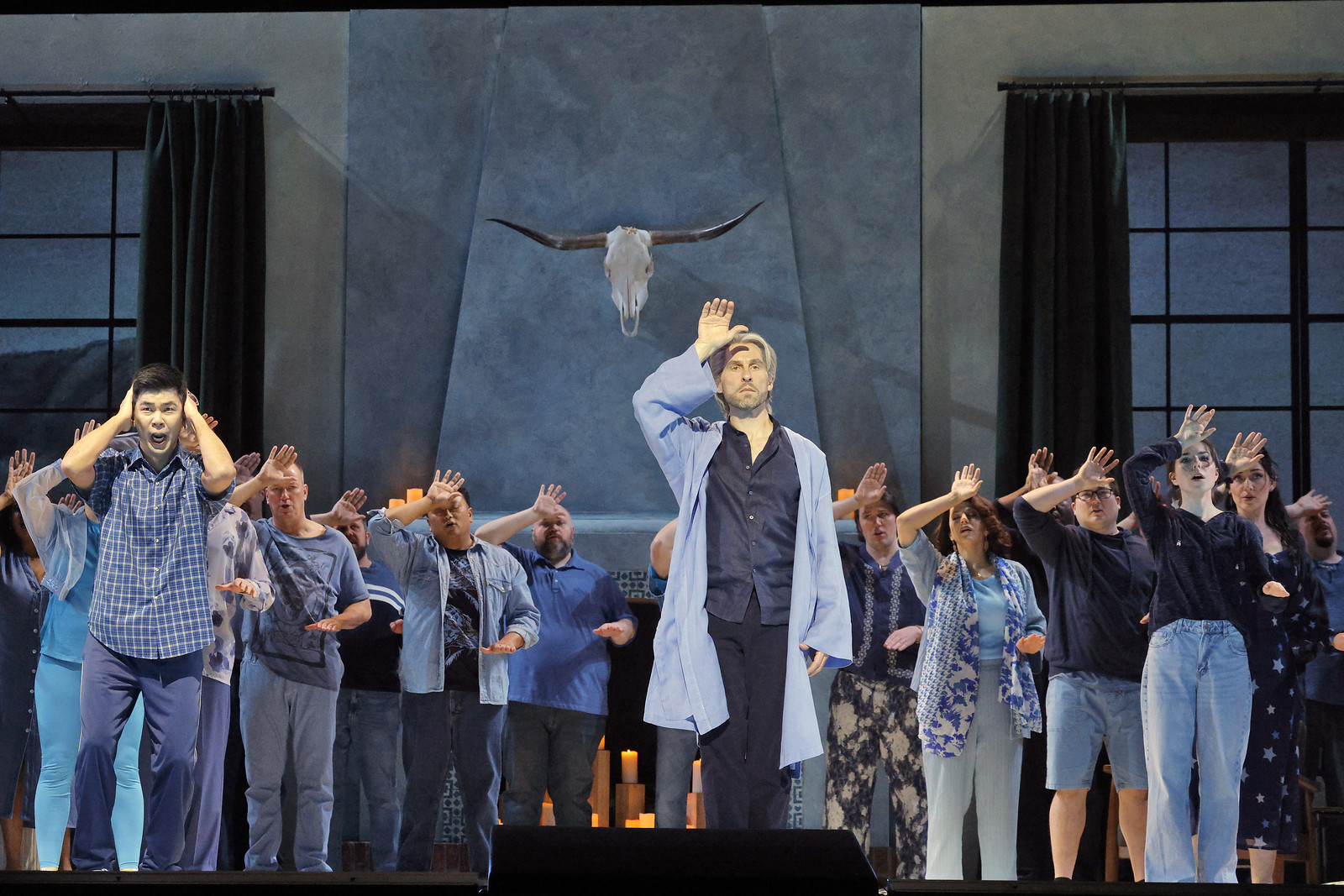
Despite its thematic overreach and occasional lack of cohesion, The Listeners offers moments of poetic resonance where music, vocals, movement, and Yi Zhao’s evocative lighting design converge to depict the characters’ obsession and suffering. These instances underscore the opera’s potential to provoke thought about past, present, and future societal manipulations, sonic disturbances, and political control.



 Deinós
Leave a comment