

Yoandy Cabrera
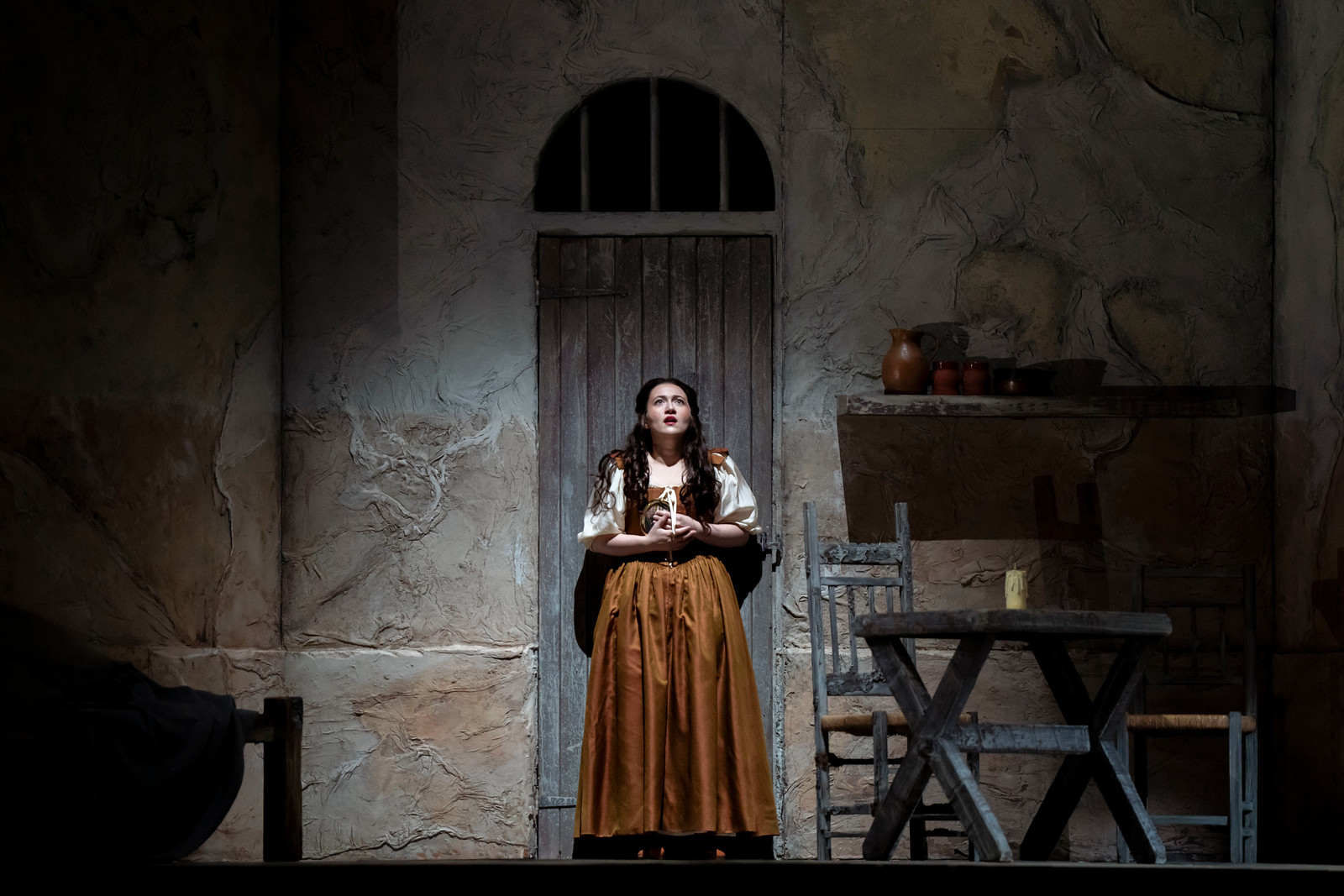
Photo by Todd Rosenberg
Giuseppe Verdi (1813-1901) composed several impressive and famous operas, making him one of the most frequently performed composers in opera houses worldwide. He created his first opera in 1836, but tragedy struck when his two young children died between 1838 and 1839, followed by the death of his wife a year later. On the verge of abandoning composition, he was persuaded by Bartolomeo Merelli of La Scala in Milan to write Nabucco (1841), which became a great success. Just one year after Nabucco, Verdi was regarded as Italy’s national composer.
The most recent production of a Verdi opera by the Lyric Opera of Chicago is Rigoletto (1851), which opened the new season on September 14, 2024, the same night I attended. Earlier this year, in March 2024, the Lyric presented Aïda. In September 2023, the company produced Ernani, followed just one month later by Don Carlos. Rigoletto is Verdi’s second most-performed opera at the Lyric, with 13 productions since its premiere in 1955, surpassed only by La Traviata, which has been staged 15 times. The Lyric has produced 19 Verdi operas, including La forza del destino, Nabucco, Attila, Macbeth, Luisa Miller, and Il trovatore.
In this Lyric production, Maestro Enrique Mazolla appeared to thoroughly enjoy conducting the orchestra, suggesting that Verdi is a composer he genuinely appreciates. As a work filled with duets and strong choral moments, Rigoletto features several excellent musical sequences, including the abduction scene (Chorus: “Zitti, zitti”).
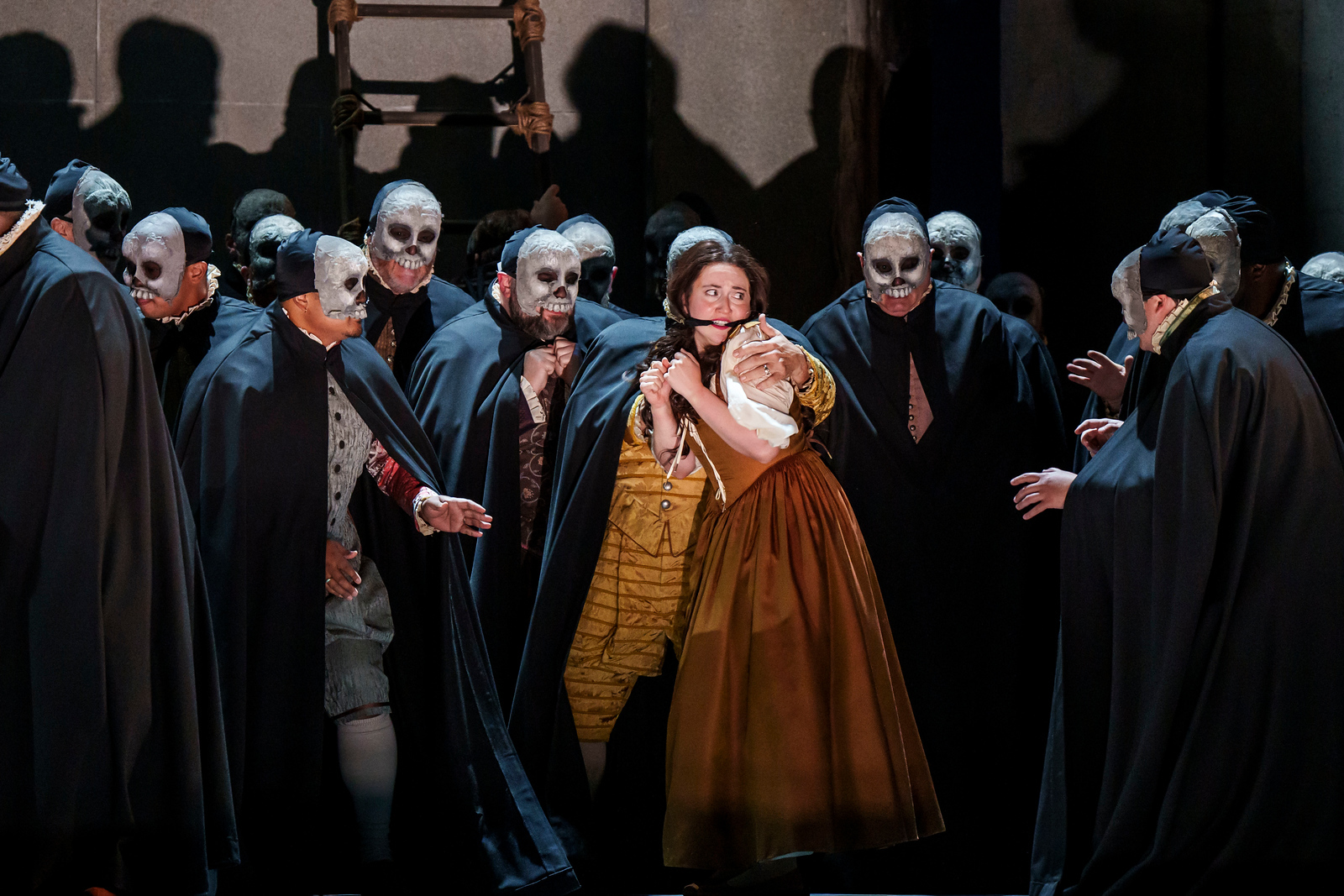
Photo by Todd Rosenberg
Mary Birnbaum, the director of this production, seeks to highlight the female characters in the opera and uses the overture to introduce Gilda (portrayed by Armenian soprano Mané Galoyan) in her modest room, reading the letters she has received from the Duke during their secret exchanges. This initial, contrasting scene is not mentioned in the program’s summary of the opera. It also creates a ring composition with the ending: while Gilda is reading the letters, a mysterious female figure appears at the back of the room, beyond an open door. Gilda, startled for a moment, becomes aware of the unexpected presence. This scene during the overture foreshadows the transcendent moment at the end when Gilda’s spirit is welcomed and guided by her mother. The ghostly appearance at the beginning also complements the tragic tone of the overture.
In her program note, the director explains that “directing standard repertoire” pieces like Rigoletto offers the “opportunity to re-examine characters who were crafted before the dawn of modern dramaturgy.” Her primary goal is to depict Gilda’s aspirations for the future, portraying her as a partial agent seeking to define her own identity amidst the limitations of 16th-century Mantua, Italy. The director explains that:
I looked to Caravaggio and, possibly more importantly, the great 17th-century artist Artemisia Gentileschi, a sexual assault victim who took matters into her own storytelling hands both by painting her rapist and calling him out in legal proceedings. I felt that Gilda, even if denied this full agency by her death, deserves her own story, and I have tried to let her tell it.
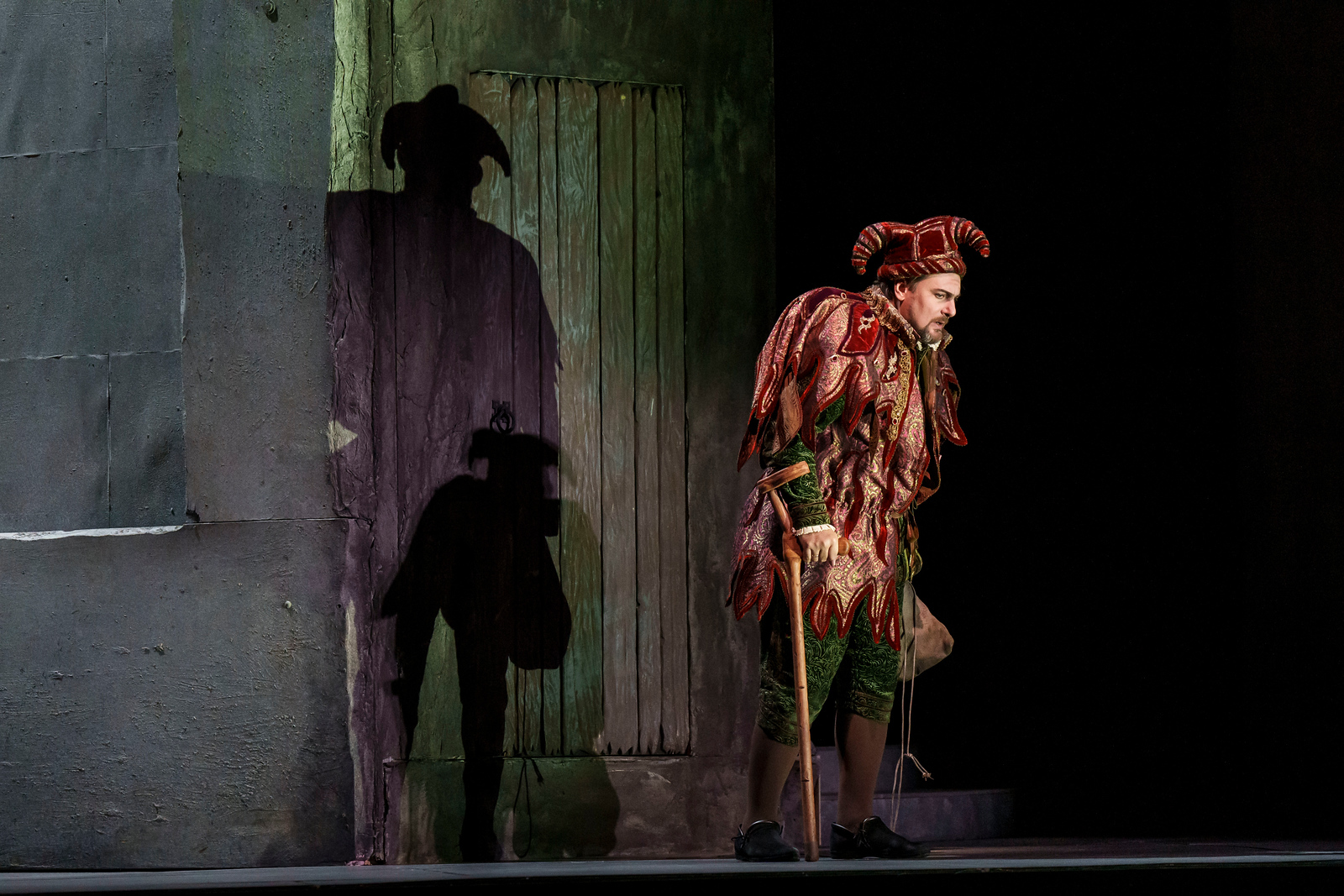
Photo by Todd Rosenberg
The tragic tone established at the beginning of the opera persists through the curses and the more serious romantic storyline from Gilda’s perspective. At the same time, the opera shifts between dark and festive moods, blending comedy with tragedy, lighthearted celebration with deep conflict. Gilda, a girl caught between the confinement imposed by her father (Rigoletto, portrayed by Russian baritone Igor Golovatenko) and her secret love for the Duke (Mexican tenor Javier Camarena), finds both worlds—home and romance—to be ultimately deceptive. Yet, this disillusionment does not diminish her love for either her father or her unfaithful lover.
Gilda’s sacrifice emerges as a deliberate and consistent decision, a solution she finds while trapped between two worlds where she doesn’t belong. In a different context, Gilda might have had the opportunity to claim her own name and independence, but she does not have that freedom. Instead, she chooses the path of self-sacrifice, honoring both her father and her lover, despite their manipulations and failings. This is what transforms Gilda into a figure resembling a divine redeemer.
One of the most remarkable musical moments in this production is the duet between Gilda and her father in Act 1. Galoyan’s rendition of “Caro nome” is one of the most heartfelt and transcendent performances I have ever witnessed in a theater. Her voice carries a profound, dark, and sweet quality simultaneously, occasionally dropping to an almost whisper-like sound, as if scraping the silence. Gilda is portrayed with great care and detail as an innocent young girl in love, embodying all the pure and vibrant energies of life.
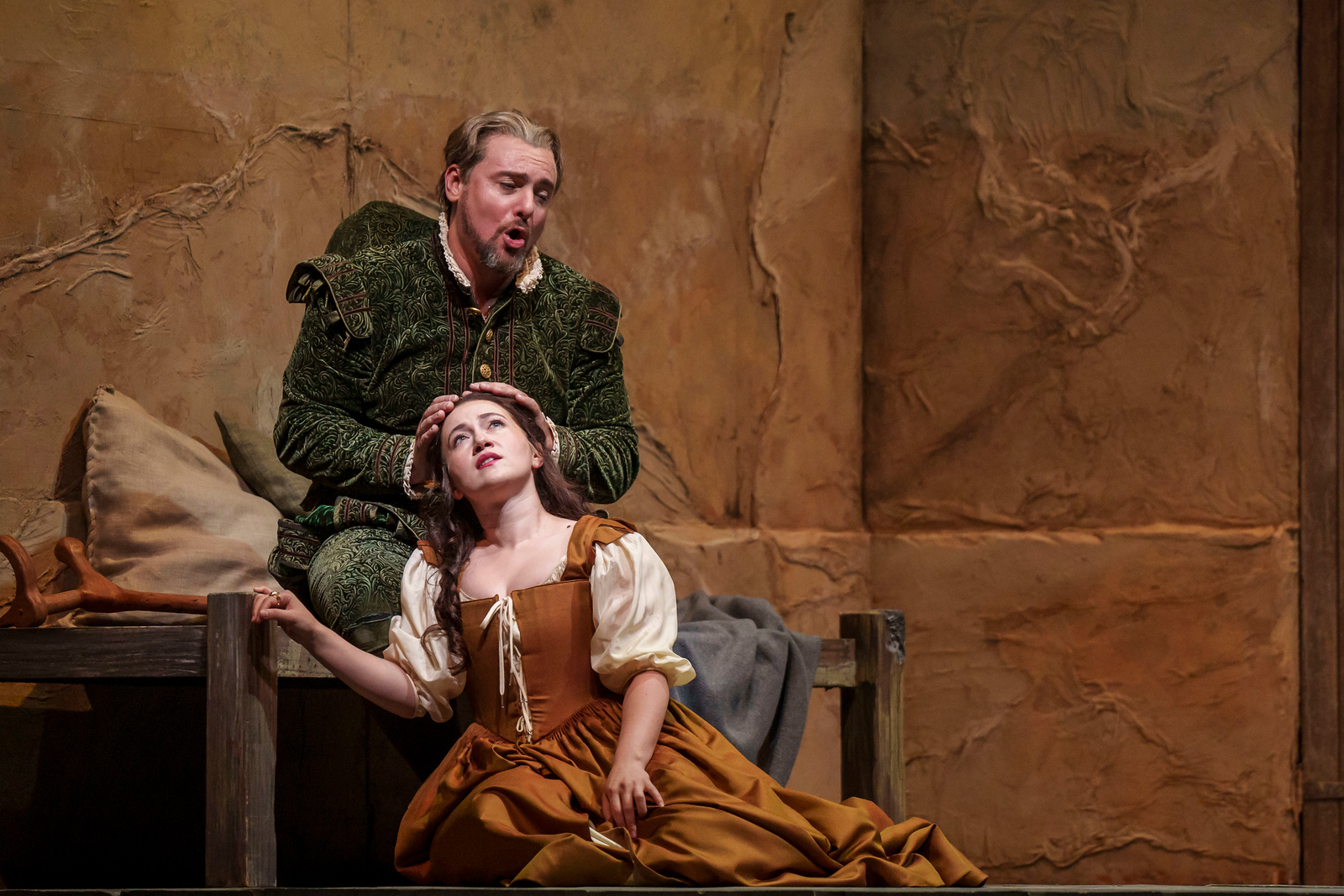
Photo by Todd Rosenberg
Caught between an overprotective father and a promiscuous lover who is constantly seeking new conquests, Gilda becomes a symbol of a better possible world—one where a decent woman does not have to hide, and where a man values a female as more than just another conquest. Through and because of her sacrifice, one hopes that the Duke of Mantua, Rigoletto, and even the audience come to realize that women are not all the same and should not be treated as interchangeable objects, countering the Duke’s carefree declaration of “questa o quella” at the opera’s beginning.
Taking a famous poem or song out of context is a dangerous and all too common mistake today. This is particularly true for the way some people read and criticize “La donna è mobile” from Act 3, perhaps because it is a well-known melody often performed as a standalone piece in concerts and opera selections. However, if one examines the context more closely, it becomes clear that the Duke, in his classic canzone, is projecting onto women what he has already said about himself in Act 1: that consistency is not his strength. From the outset of the opera, the Duke declares, “la costanza, tiranna del core, detestiamo qual morbo crudele” (“Consistency—that tyrant of the heart—we shun like pestilence”). By focusing on the plot and the characterization of the protagonists, it becomes evident that, rather than defining women, the Duke is essentially defining himself through his song:
qual piuma al vento,
muta d’accento
e di pensier.
Sempre un amabile
leggiadro viso,
in pianto o in riso
è menzognero.
(as feathers in the wind,
simple in speech,
and simple in mind.
always the loveable,
sweet, laughing face,
but laughing or crying,
the face is false for sure.)
It is in these laughable contradictions and the mirroring effect that the character, apart from being sexist and superficial, reveals himself as a parody of his own persona. His words cannot be trusted, ultimately boomeranging against him. His contradictions become even more evident when we see that, while singing the famous aria, he is the one being fickle (mobile), flirting with Maddalena (portrayed by American mezzo-soprano Zoie Reams), the assassin’s attractive sister. Meanwhile, Gilda, the donna who is not mobile at all, watches from outside as the Duke, the man who is mobile, seduces and flirts with the new woman.
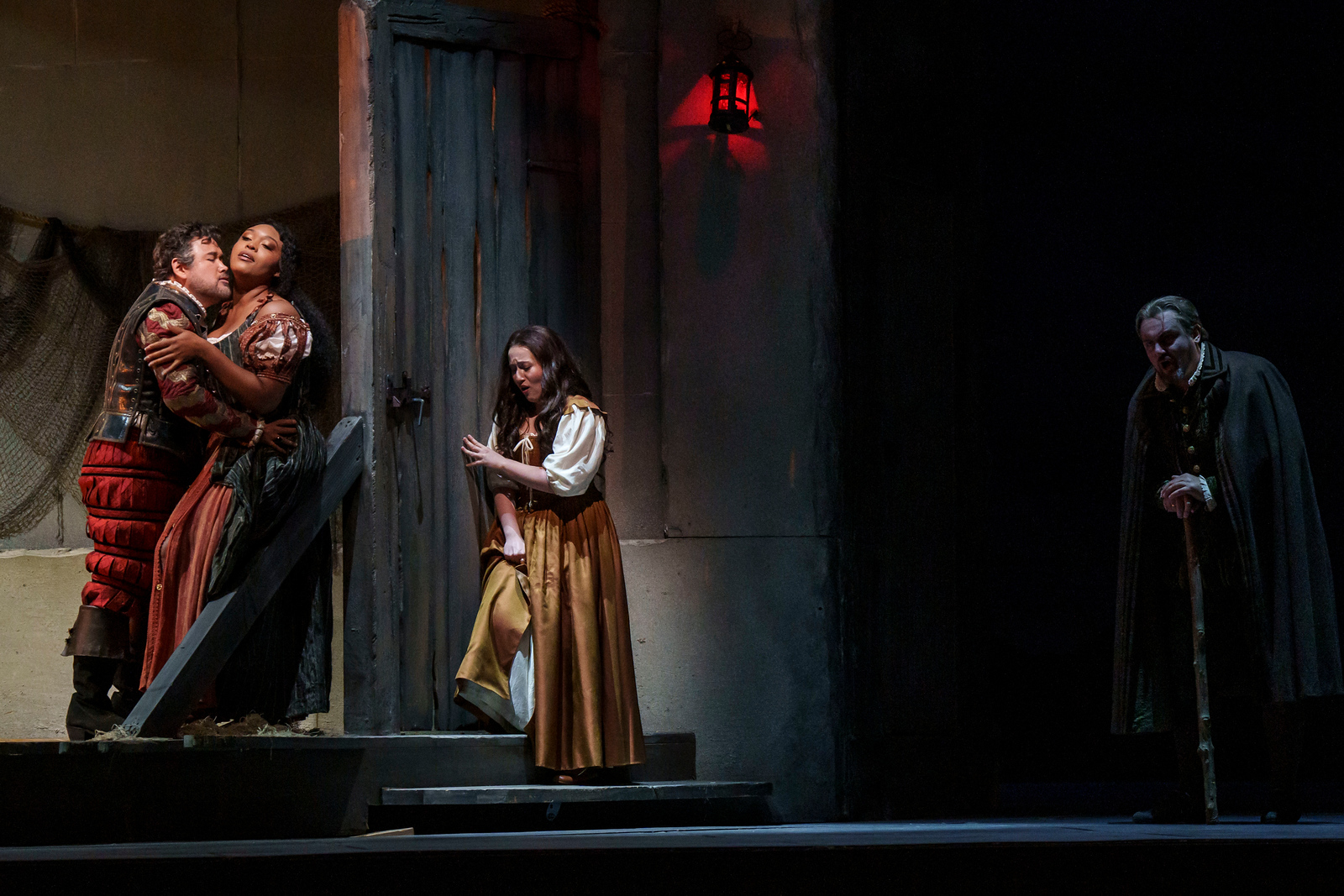
Mané Galoyan as Gilda, and Igor Golovatenko as Rigoletto
Photo by Todd Rosenberg
At the same time, the aforementioned romantic and idealized soprano aria known as “Caro nome” takes on a sarcastic tone within its context, as the name the Duke has given to Gilda—the “caro nome” she sings about—is a false one. However, her candor and innocence become the most significant elements of this tender melody and the entire opera. Regardless of whether her father and lover deserve her, her inherent inclination is to love and sacrifice herself, even to save those who do not merit her devotion.
Rigoletto, in his misguided attempts, believes he is saving his daughter from the very macho behaviors he celebrates in others during public festivities. Meanwhile, the Duke thinks he can continue dishonoring other girls without facing any consequences. Monterone (portrayed by Romanian-American baritone Andrew Manea) curses both of them, introducing a dark and threatening order amidst their jokes and revelries. Gilda emerges as both the punishment for her father and the salvation for her lover through these curses: by dying, she takes the place of the Duke and saves him, even though he is not worthy of her sacrifice.
As the main female character in this opera, Gilda defines herself in opposition to the other protagonists: a man who lives a double life as her secret father and a sharp-witted buffoon, keeping her sheltered away from the licentious world of the Duke’s court; a lover (the Duke) who is perpetually focused on his next conquest; and a professional assassin (Sparafucile, portrayed by Soloman Howard) who views killing as a simple and ordinary transaction. Throughout the opera, Gilda navigates her father’s controlled environment, designed for her, and her life with the Duke in his palace, ultimately realizing that she does not fit into either. However, running away is not a solution for her.
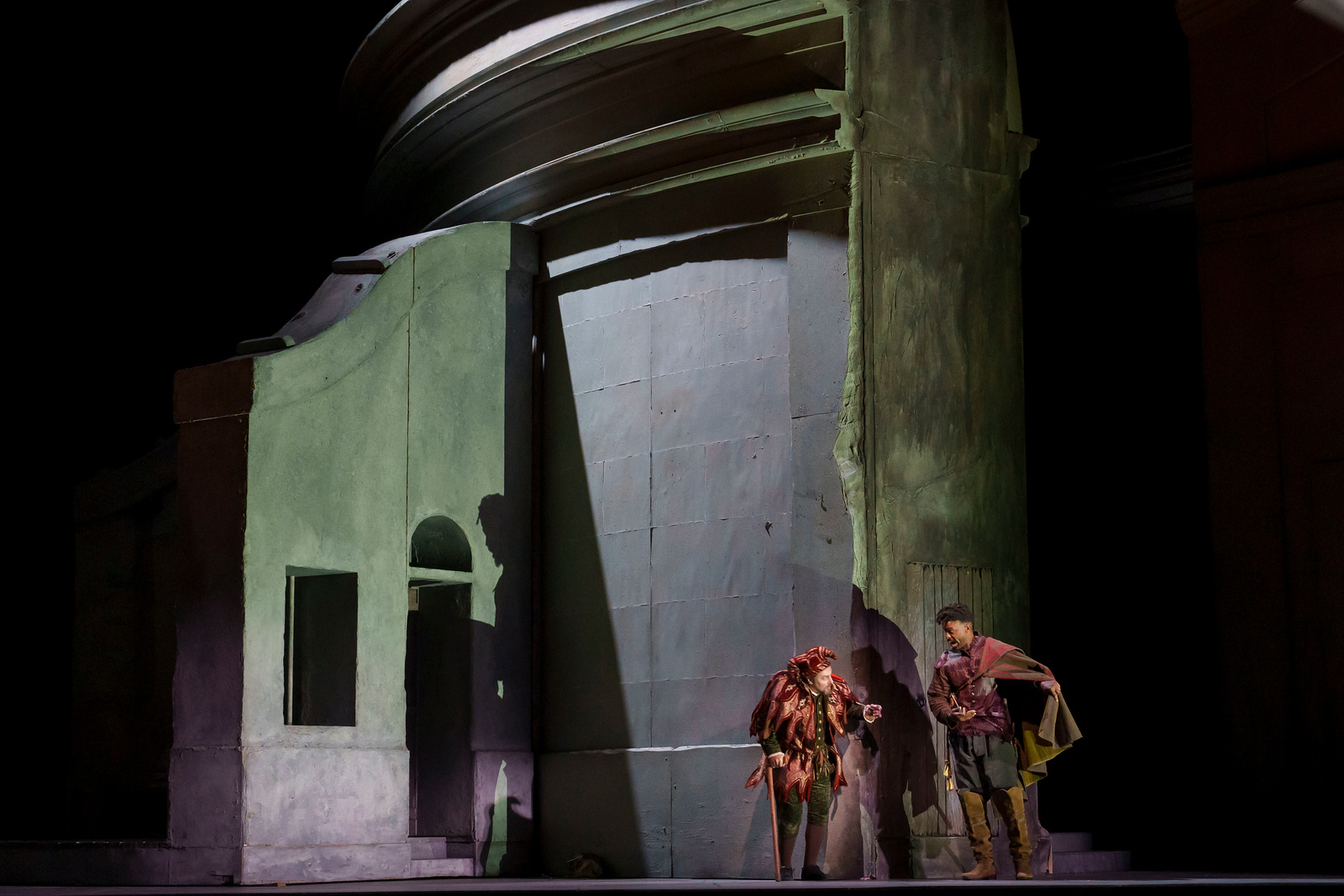
Photo by Todd Rosenberg
By disguising herself as a man and choosing to sacrifice herself so the Duke may live—despite witnessing his faithlessness—Gilda becomes Sparafucile’s next victim, defying her father’s plan and embodying a higher form of masculinity. Her actions exemplify a compassionate virility, one that is open to forgiveness and transcends both extreme control and licentiousness. A woman disguised as a man challenges the morality and pleasure of the men around her, who, by hiding or seducing her, attempted to limit her life but ultimately failed. A fitting way to articulate Gilda’s choices and emotions is through the verses from 1 Corinthians 13:
Love is patient and kind; love does not envy or boast; it is not arrogant or rude. It does not insist on its own way; it is not irritable or resentful; it does not rejoice at wrongdoing, but rejoices with the truth. Love bears all things, believes all things, hopes all things, endures all things. Love never ends.
Every time I read this passage, it inspires me to become a better person, just as Gilda’s actions and sacrifice aim to touch the hearts of the Duke and her father, encouraging them to strive for improvement. Gilda does not rejoice in wrongdoing; she bears all things, believes all things, hopes all things, and endures all things. Even for men like the Duke, who might think they are living the life they desire, Gilda’s actions can serve as a wake-up call to a better and more profound way of love.
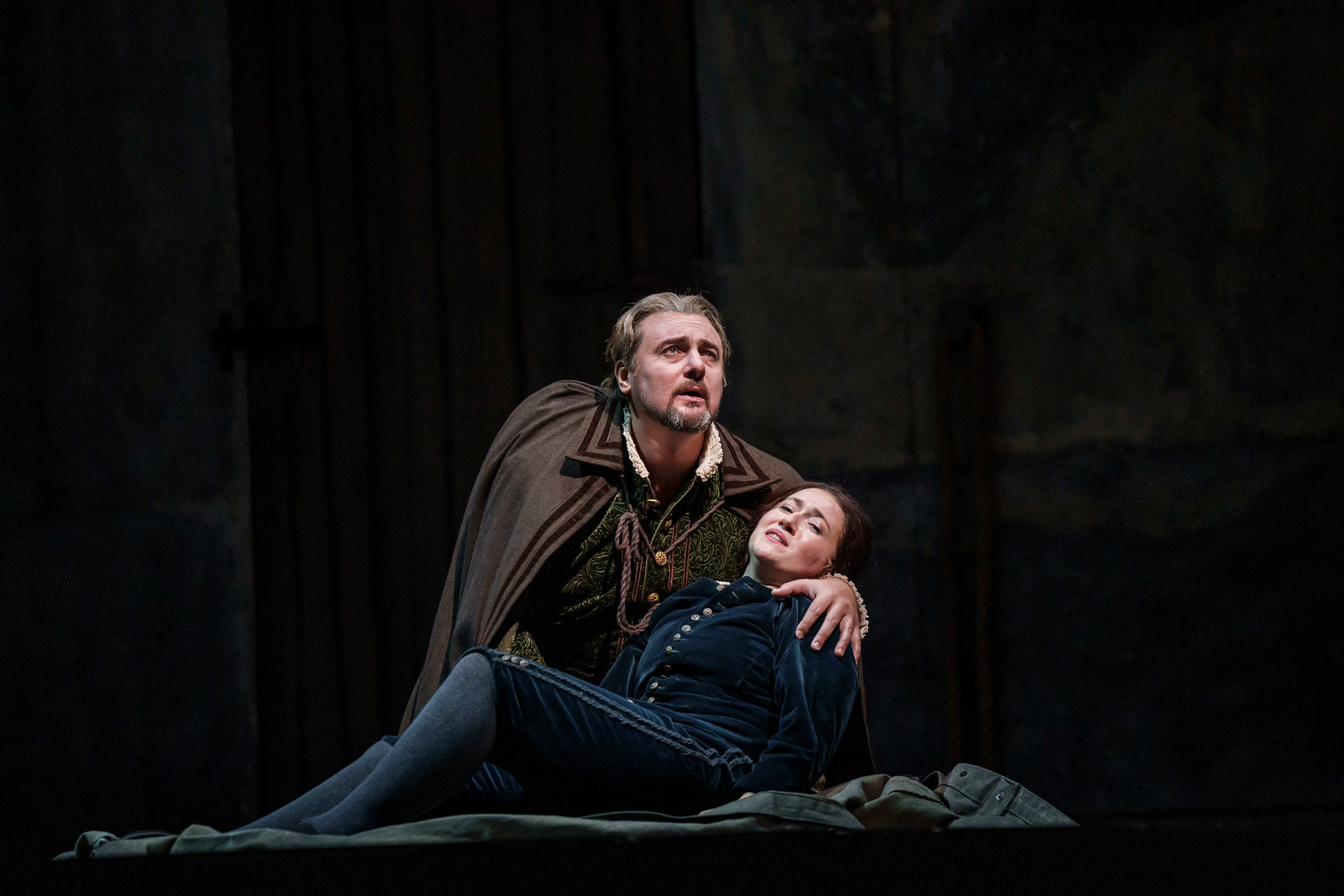
Photo by Todd Rosenberg


 Deinós
Leave a comment